 JAMESTOWN, VIRGINIA—The Williamsburg Yorktown Daily
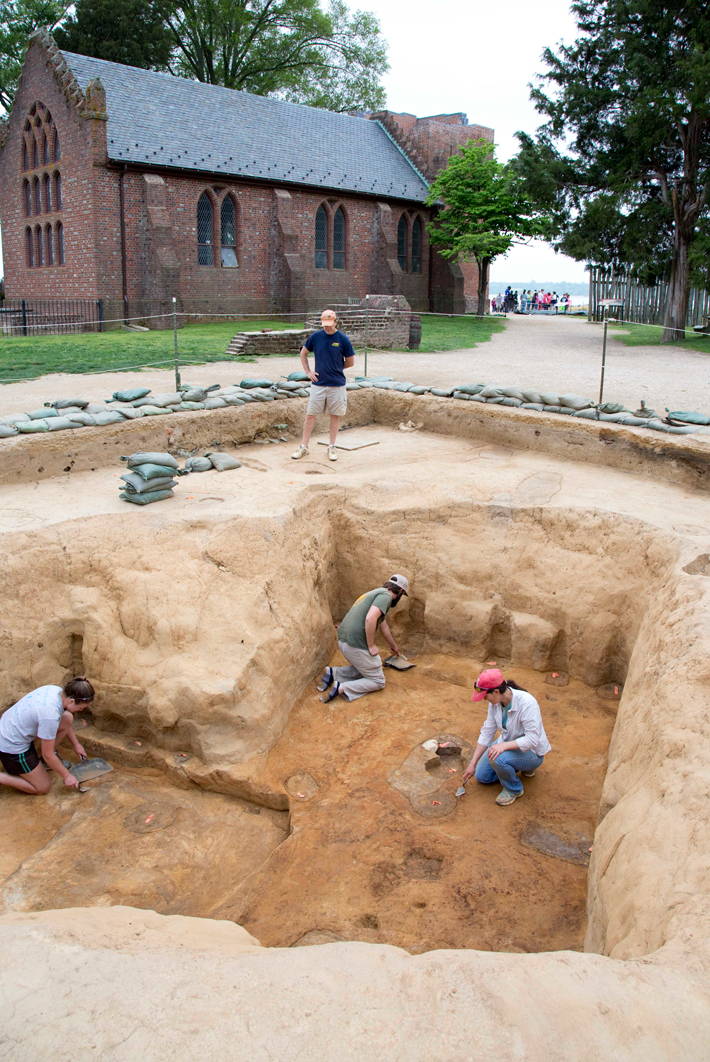
reports that archaeologists from the Jamestown Rediscovery Project are
excavating the well found within the cellar that had been built by the
colonists just outside the perimeter of the original James Fort
structure. The team expected the well to have been filled with trash,
like other old, brackish wells at James Fort. This well, however, was
filled with clay. Senior staff archaeologist Mary Anna Richardson thinks
that when the colonists expanded the cellar after the winter of
1609-1610, they put the clay they dug up into the well. Because the well had been located inside and down a flight of stairs, it may have been an inconvenient trash pit. “An
absence of artifacts is actually a key part of the story,” added senior
staff archaeologist Danny Schmidt. The bottom layer of the well may
hold artifacts from the time when the well was in use.
JAMESTOWN, VIRGINIA—The Williamsburg Yorktown Daily
reports that archaeologists from the Jamestown Rediscovery Project are
excavating the well found within the cellar that had been built by the
colonists just outside the perimeter of the original James Fort
structure. The team expected the well to have been filled with trash,
like other old, brackish wells at James Fort. This well, however, was
filled with clay. Senior staff archaeologist Mary Anna Richardson thinks
that when the colonists expanded the cellar after the winter of
1609-1610, they put the clay they dug up into the well. Because the well had been located inside and down a flight of stairs, it may have been an inconvenient trash pit. “An
absence of artifacts is actually a key part of the story,” added senior
staff archaeologist Danny Schmidt. The bottom layer of the well may
hold artifacts from the time when the well was in use.Monday, 20 June 2016
An Update from Virginia’s James Fort
JAMESTOWN, VIRGINIA—The Williamsburg Yorktown Daily
reports that archaeologists from the Jamestown Rediscovery Project are
excavating the well found within the cellar that had been built by the
colonists just outside the perimeter of the original James Fort
structure. The team expected the well to have been filled with trash,
like other old, brackish wells at James Fort. This well, however, was
filled with clay. Senior staff archaeologist Mary Anna Richardson thinks
that when the colonists expanded the cellar after the winter of
1609-1610, they put the clay they dug up into the well. Because the well had been located inside and down a flight of stairs, it may have been an inconvenient trash pit. “An
absence of artifacts is actually a key part of the story,” added senior
staff archaeologist Danny Schmidt. The bottom layer of the well may
hold artifacts from the time when the well was in use.
Iron-Age Remains Found on Isle of Wight
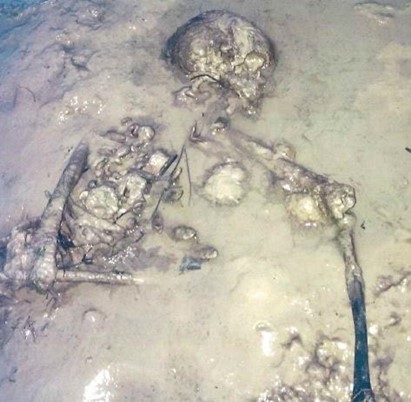 ISLE OF WIGHT, ENGLAND—Last year, two brothers discovered a set of human
remains in the silt on Fishbourne Beach at low tide. The skeleton was
lying on its left-hand side with its arms against its chest and legs
bent. No clothing or other objects were found. According to On the Wight,
local officials decided to recover as many of the bones as possible
before the tide came in. A postmortem conducted by pathologist Basil
Purdue concluded that the bones were ancient and belonged to a woman
whose upper left arm bone and left collarbone were shorter than those on
the right side of her body. She may have had a congenital deformity, or
perhaps had suffered from a stroke that caused muscle wasting in the
years before her death. Radiocarbon dating revealed the remains were
nearly 2,000 years old. Barrister Caroline Sumeray explained that the
remains will be housed at the Isle of Wight Museum. “They will be
appropriately and ethically stored and recorded as per national
guidelines for the treatment of human remains,” she said.
ISLE OF WIGHT, ENGLAND—Last year, two brothers discovered a set of human
remains in the silt on Fishbourne Beach at low tide. The skeleton was
lying on its left-hand side with its arms against its chest and legs
bent. No clothing or other objects were found. According to On the Wight,
local officials decided to recover as many of the bones as possible
before the tide came in. A postmortem conducted by pathologist Basil
Purdue concluded that the bones were ancient and belonged to a woman
whose upper left arm bone and left collarbone were shorter than those on
the right side of her body. She may have had a congenital deformity, or
perhaps had suffered from a stroke that caused muscle wasting in the
years before her death. Radiocarbon dating revealed the remains were
nearly 2,000 years old. Barrister Caroline Sumeray explained that the
remains will be housed at the Isle of Wight Museum. “They will be
appropriately and ethically stored and recorded as per national
guidelines for the treatment of human remains,” she said.Traces of England’s Industrial Past Unearthed in Devon
 DEVON, ENGLAND—According to a report in The Exeter Express and Echo,
the Stover Canal, completed in 1794, was used to transport ball clay
for making pottery from pits in the Bovey Basin to the port at
Teignmouth for distribution. For the first time, a team of volunteers
led by archaeologist Phil Newman of the Stover Canal Trust has excavated
the remains of a 200-year-old canal barge at Ventiford Basin, in an
upper section of the canal. By 1820, the canal was also used to
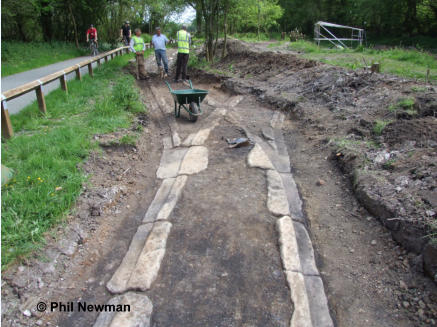
transport granite from local quarries to the docks. Part of the journey
was conducted on an unusual tramway made of granite blocks.
Archaeologists have uncovered a section of the tramway, measuring more
than 87 yards long, near the canal. “Although long and impressive
sections of the tramroad survive in situ within Dartmoor National Park,
until now it had been believed that the track was lost completely
between Bovey Tracey and the head of the canal,” Newman said. “However,
this amazing find, which represents three sidings off the main route,
provides the only significant surviving section outside the national
park.”
DEVON, ENGLAND—According to a report in The Exeter Express and Echo,
the Stover Canal, completed in 1794, was used to transport ball clay
for making pottery from pits in the Bovey Basin to the port at
Teignmouth for distribution. For the first time, a team of volunteers
led by archaeologist Phil Newman of the Stover Canal Trust has excavated
the remains of a 200-year-old canal barge at Ventiford Basin, in an
upper section of the canal. By 1820, the canal was also used to
transport granite from local quarries to the docks. Part of the journey
was conducted on an unusual tramway made of granite blocks.
Archaeologists have uncovered a section of the tramway, measuring more
than 87 yards long, near the canal. “Although long and impressive
sections of the tramroad survive in situ within Dartmoor National Park,
until now it had been believed that the track was lost completely
between Bovey Tracey and the head of the canal,” Newman said. “However,
this amazing find, which represents three sidings off the main route,
provides the only significant surviving section outside the national
park.”Ancient Crops Offer Clues to Colonization of Madagascar
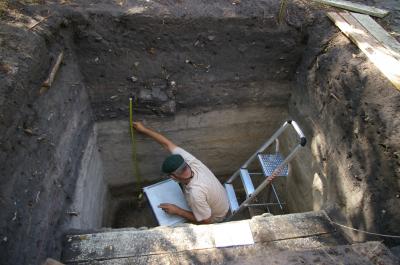
BRISBANE, AUSTRALIA—Linguistic and genetic evidence has hinted that
migrants from Southeast Asia could be among the ancestors of the modern
inhabitants of Madagascar. Now Science
reports that Austronesians may have settled in Madagascar between 1,000
and 1,200 years ago. Led by archaeologist Alison Crowther of the
University of Queensland, an international team of scientists collected
more than 2,400 ancient crop samples from 20 archaeological sites on the
eastern coast of Africa, Madagascar, and the Comoro Islands, which are
situated between Madagascar and the African coast. Radiocarbon dates of
the charred seeds indicate that between A.D. 700 and 1200, crops such as
pearl millet, cowpea, and sorghum were grown on the coast of East
Africa, where Asian crops such as rice, mung bean, and cotton were rare.
But the Asian crops were common on the Comoros Islands and on
Madagascar. And although rice and mung bean were grown in India at the
time, other common Indian crops were not found in Madagascar and the
other islands. “We finally have a signal of this Austronesian
expansion,” said Nicole Boivin of the Max Planck Institute for the
Science of Human History.
Phoenician DNA Sequenced
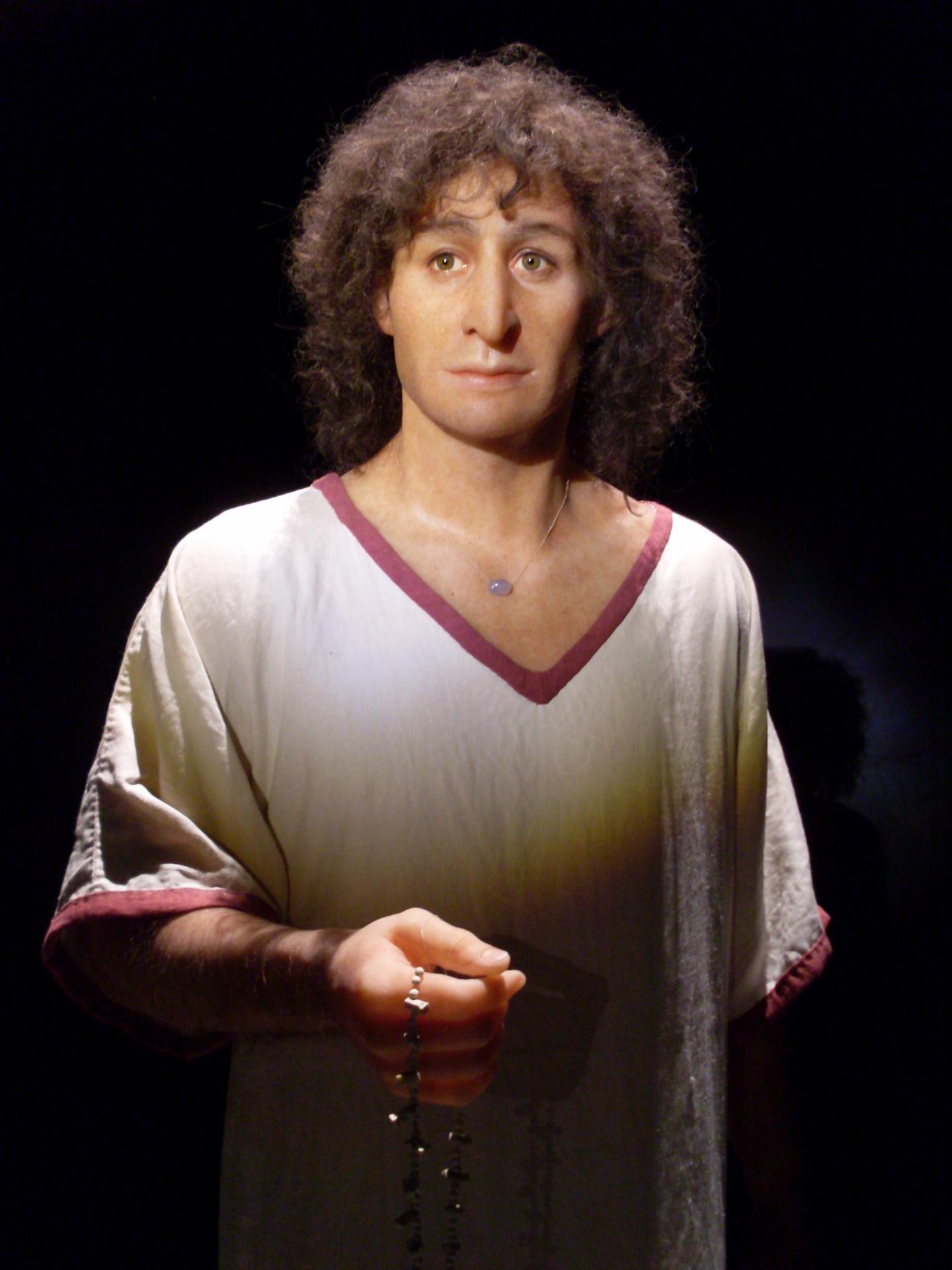 Scientists have completely mapped the genome of the "Young Man of
Byrsa,” a Phoenician who lived 2,500 years ago, and whose remains were
discovered outside Carthage in 1994, reports the Independent. The Phoenicians were an influential seafaring people who originated in Lebanon around 1500 B.C. and then colonized much of the Mediterranean, including what is now Tunisia, where they founded Carthage, The team, Co-led by University of Otago geneticist Lisa Matisoo-Smith,
found that the man had a rare mitochondrial haplogroup that is thought
to have originated 20,000 to 25,000 years ago among European
hunter-gatherer populations. His DNA most closely matched that of a
modern-day Portuguese person, and the researchers speculate that the
Young Man of Byrsa's maternal ancestry lay somewhere on the Iberian
Peninsula, not in North Africa or the Near East, as might have been
expected. The team hopes further research on Phoenician DNA will reveal more about ancient migration and exchange patterns.
Scientists have completely mapped the genome of the "Young Man of
Byrsa,” a Phoenician who lived 2,500 years ago, and whose remains were
discovered outside Carthage in 1994, reports the Independent. The Phoenicians were an influential seafaring people who originated in Lebanon around 1500 B.C. and then colonized much of the Mediterranean, including what is now Tunisia, where they founded Carthage, The team, Co-led by University of Otago geneticist Lisa Matisoo-Smith,
found that the man had a rare mitochondrial haplogroup that is thought
to have originated 20,000 to 25,000 years ago among European
hunter-gatherer populations. His DNA most closely matched that of a
modern-day Portuguese person, and the researchers speculate that the
Young Man of Byrsa's maternal ancestry lay somewhere on the Iberian
Peninsula, not in North Africa or the Near East, as might have been
expected. The team hopes further research on Phoenician DNA will reveal more about ancient migration and exchange patterns.Neanderthal Structures in French Cave Studied
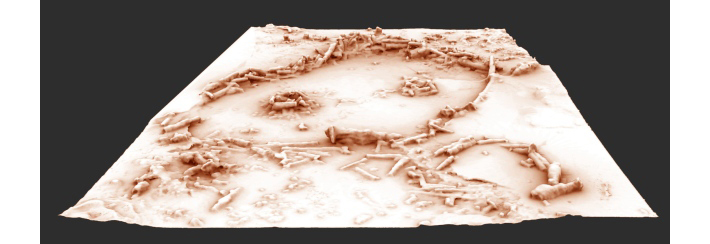
A number of semicircular walls built from stalagmites by Neanderthals
deep in a cave in southwestern France have been dated to around 176,000
years old, making them among the world’s oldest constructions, according
to a report in Nature News.
The six structures, first discovered in Bruniquel Cave in the early
1990s, are made of around 400 large stalagmite pieces broken from the
cave floor and arranged in semi-circles as large as 22 feet wide. They
lie around a fifth of a mile from the cave’s entrance and getting to
them requires navigating a narrow approach. Researchers believe that at
one time the pieces were stacked up to create walls. “It’s obvious when
you see it, that it’s not natural,” said Dominique Genty of the
Institute Pierre-Simon Laplace. Analysis of calcite that has accumulated
on the stalagmites since they were broken established that the
structures date to between 174,400 and 178,600 years ago. No remains of
early humans, stone tools, or signs of occupation have been found, but
researchers have concluded that Neanderthals made the structures as no
other hominins are known to have been present in the area at the time.
Scanning Prehistoric Alpine Art
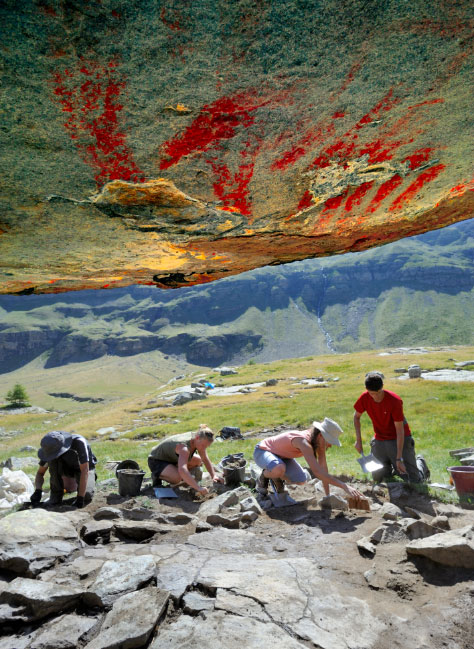 In a small rock shelter in the French Alps some 7,000 feet above sea level, archaeologists have used laser scans to create virtual models of the highest rock art depictions of animals ever discovered in Europe, reports the Yorkshire Post. The shelter was in regular use beginning
in the Mesolithic period, about 10,000 years ago, and was at least
occasionally occupied up to the medieval period. The team, led by
University of York archaeologist Kevin Walsh, has found Mesolithic and
Neolithic flint tools at the site, along with Iron Age pottery, a
Roman-era brooch, and medieval metal objects. Nearby the cave they
discovered Bronze Age stone dwellings and animal enclosures. While
direct dating of the paintings themselves is impossible, they seem to be
analogous to art made during the Neolithic at lower altitudes, and
appear to depict a deer hunting scene.
In a small rock shelter in the French Alps some 7,000 feet above sea level, archaeologists have used laser scans to create virtual models of the highest rock art depictions of animals ever discovered in Europe, reports the Yorkshire Post. The shelter was in regular use beginning
in the Mesolithic period, about 10,000 years ago, and was at least
occasionally occupied up to the medieval period. The team, led by
University of York archaeologist Kevin Walsh, has found Mesolithic and
Neolithic flint tools at the site, along with Iron Age pottery, a
Roman-era brooch, and medieval metal objects. Nearby the cave they
discovered Bronze Age stone dwellings and animal enclosures. While
direct dating of the paintings themselves is impossible, they seem to be
analogous to art made during the Neolithic at lower altitudes, and
appear to depict a deer hunting scene.19th-Century Ship Found Underground in Boston
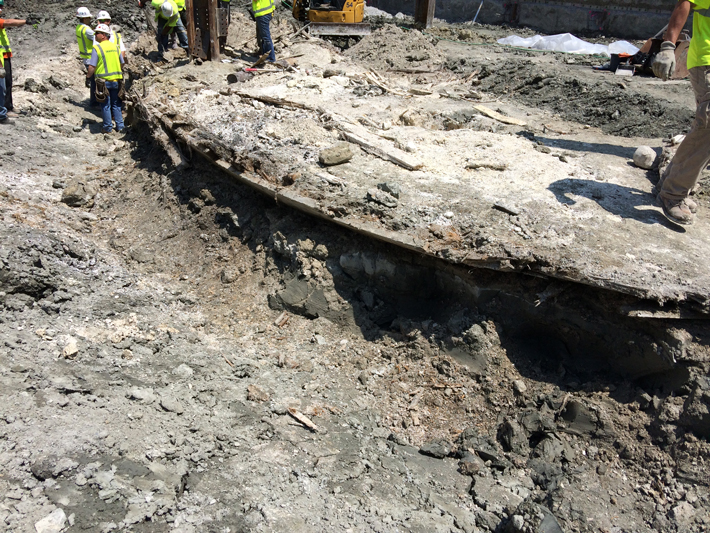
The remains of a ship were recently discovered underground at a
construction site in Boston’s Seaport District. Over the past few days,
Boston’s city archaeologist, Joe Bagley, and colleagues have scrambled
to learn as much about it as possible before construction resumes. Based
on the ship’s nails, they have determined that it dates to the
mid-to-late nineteenth century. “It’s not terribly old,” Bagley told Boston.com,
“but it’s part of the maritime history of Boston either way.” The area
where the approximately 50-foot-long ship was found consisted of
mudflats that were filled in 1880 to create more buildable land. It is
unclear whether the ship was deliberately sunk or left in place after
crashing or running aground. There is evidence of a fire on board,
though it could have occurred while the ship sank or later, to reduce
the size of the wreckage. Inside the ship, the archaeologists have found
dozens of barrels of lime, which may have been transported from Maine
for use in concrete or to make paper.
Female Mummy Found in Egypt’s Tombs of the Nobles
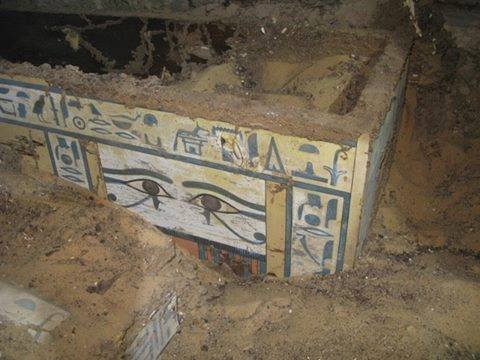 The mummy of an important woman named Sachiny from ancient Egypt’s Middle Kingdom has been discovered, according to a report in Egypt Independent.
A team headed by archaeologist Alejandro Jimenez found the mummy in a
two-layer cedar coffin during an excavation at the Tombs of the Nobles,
west of Aswan in southern Egypt. The coffins had hieroglyphic
inscriptions that helped identify the mummy. In addition, the inner
coffin’s wood was in good condition, allowing it to be dated. Sachiny,
who lived during the Twelfth Dynasty (1938–1755 B.C.), was part of a
royal family. The Tomb of the Nobles also includes tombs of the
governors of Aswan from ancient Egypt’s Old and Middle Kingdoms.
The mummy of an important woman named Sachiny from ancient Egypt’s Middle Kingdom has been discovered, according to a report in Egypt Independent.
A team headed by archaeologist Alejandro Jimenez found the mummy in a
two-layer cedar coffin during an excavation at the Tombs of the Nobles,
west of Aswan in southern Egypt. The coffins had hieroglyphic
inscriptions that helped identify the mummy. In addition, the inner
coffin’s wood was in good condition, allowing it to be dated. Sachiny,
who lived during the Twelfth Dynasty (1938–1755 B.C.), was part of a
royal family. The Tomb of the Nobles also includes tombs of the
governors of Aswan from ancient Egypt’s Old and Middle Kingdoms.Roman Necropolis Discovered in Croatia
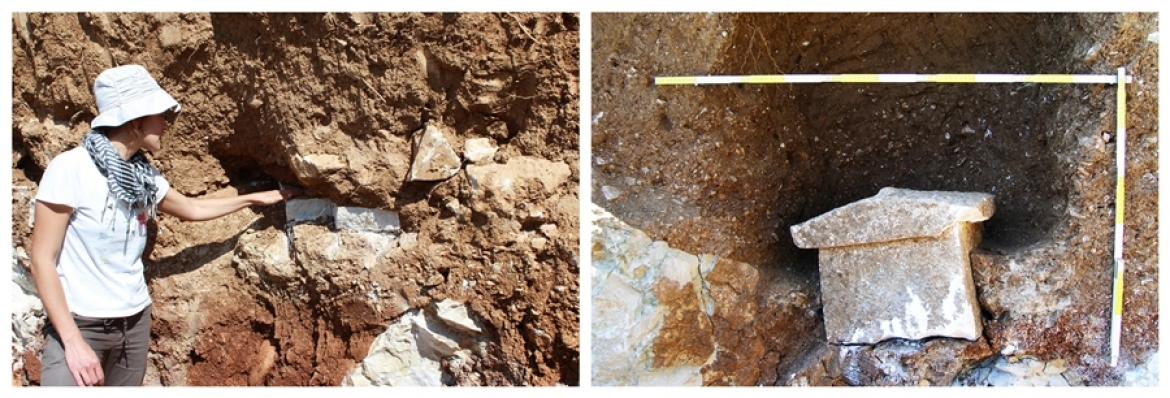
Workers expanding a private parking lot in the coastal Croatian town of
Trogir inadvertently unearthed a number of Roman-era graves, reports Total Croatia News.
Upon learning of the discovery, the parking lot's owner halted work and
contacted the staff of the local Trogir Museum. Archaeologists then
found four stone urns and up to 18 tombstones left intact in the
necropolis, which was located near a former Roman road that led from the
city, then known as Tragurium, to the surrounding countryside. Dating to the first century A.D., the
burials probably belonged to members of the upper class, as suggested by
the discovery of grave goods such as a glass perfume bottle and a
bronze needle. The team expects to find more burials as they continue to
work at the site.
Subscribe to:
Posts (Atom)