 JERUSALEM,
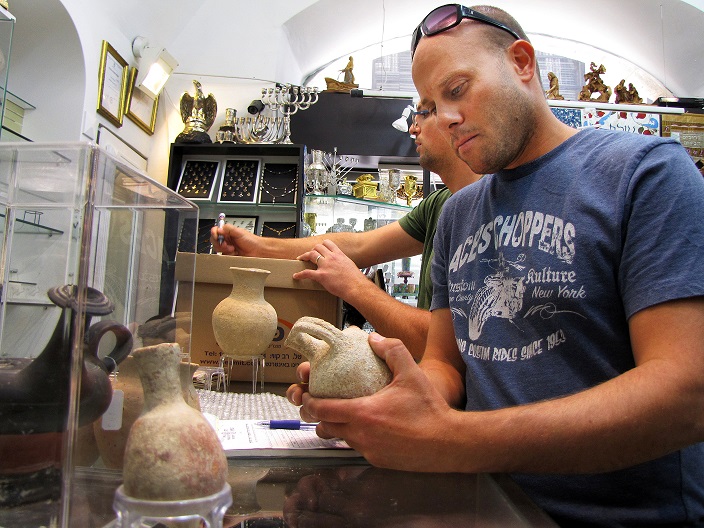
ISRAEL—Israel Antiquities Authority (IAA) agents confiscated bronze
arrowheads, 2,000-year-old coins, perfume vessels, and other ancient
artifacts during the raid of a souvenir store in an upscale Jerusalem
mall that was lacking a proper license. The Times of Israel reports
that earlier this year, the IAA mandated licensed dealers of
antiquities use a digitized inventory system and upload detailed
descriptions of their items for sale into an IAA database. According to
the IAA, the new system should prevent licensed dealers from
“laundering” artifacts acquired illegally and manipulating inventories.
Eitan Klein, deputy head of the IAA's theft prevention unit, said that
before the new regulations were implemented “it was abundantly clear
that in order to supply the merchandise antiquities sites in Israel and
around the world were being plundered and history was sold to the
highest bidder.
JERUSALEM,
ISRAEL—Israel Antiquities Authority (IAA) agents confiscated bronze
arrowheads, 2,000-year-old coins, perfume vessels, and other ancient
artifacts during the raid of a souvenir store in an upscale Jerusalem
mall that was lacking a proper license. The Times of Israel reports
that earlier this year, the IAA mandated licensed dealers of
antiquities use a digitized inventory system and upload detailed
descriptions of their items for sale into an IAA database. According to
the IAA, the new system should prevent licensed dealers from
“laundering” artifacts acquired illegally and manipulating inventories.
Eitan Klein, deputy head of the IAA's theft prevention unit, said that
before the new regulations were implemented “it was abundantly clear
that in order to supply the merchandise antiquities sites in Israel and
around the world were being plundered and history was sold to the
highest bidder.
Showing posts with label ARCHAEOLOGY. Show all posts
Showing posts with label ARCHAEOLOGY. Show all posts
Wednesday, 29 June 2016
Agents Raid Jerusalem Souvenir Store
JERUSALEM,
ISRAEL—Israel Antiquities Authority (IAA) agents confiscated bronze
arrowheads, 2,000-year-old coins, perfume vessels, and other ancient
artifacts during the raid of a souvenir store in an upscale Jerusalem
mall that was lacking a proper license. The Times of Israel reports
that earlier this year, the IAA mandated licensed dealers of
antiquities use a digitized inventory system and upload detailed
descriptions of their items for sale into an IAA database. According to
the IAA, the new system should prevent licensed dealers from
“laundering” artifacts acquired illegally and manipulating inventories.
Eitan Klein, deputy head of the IAA's theft prevention unit, said that
before the new regulations were implemented “it was abundantly clear
that in order to supply the merchandise antiquities sites in Israel and
around the world were being plundered and history was sold to the
highest bidder.
Who Was Buried in Egypt’s KV55?
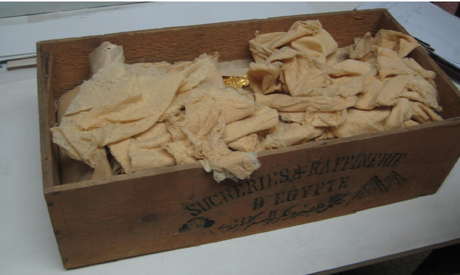 LUXOR, EGYPT—Funded with a grant from the American Research Center in
Egypt Endowment Fund, Egypt’s Ministry of Antiquities will begin the
second phase of a study to identify a sarcophagus found in tomb KV55 in
the Valley of the Kings in 1906. The results of the first phase of the
study suggested that a box of 500 gold sheets, found in a storage room
at the Egyptian Museum in Tahrir, may belong to the KV55 sarcophagus. Ahram Online
reports that the remains of a skull and a note written in French were
found along with the box. Elham Salah, head of the ministry’s Museums
Department, says the note is dated to the time of the discovery of tomb
KV55, and it states that the gold sheets were discovered with a
sarcophagus.
LUXOR, EGYPT—Funded with a grant from the American Research Center in
Egypt Endowment Fund, Egypt’s Ministry of Antiquities will begin the
second phase of a study to identify a sarcophagus found in tomb KV55 in
the Valley of the Kings in 1906. The results of the first phase of the
study suggested that a box of 500 gold sheets, found in a storage room
at the Egyptian Museum in Tahrir, may belong to the KV55 sarcophagus. Ahram Online
reports that the remains of a skull and a note written in French were
found along with the box. Elham Salah, head of the ministry’s Museums
Department, says the note is dated to the time of the discovery of tomb
KV55, and it states that the gold sheets were discovered with a
sarcophagus.Family Burial Plot Unearthed in Indiana Roadway
AMITY, INDIANA—The remains of two women, a man, and four children have
been recovered from a family plot in the middle of a road in rural
central Indiana. The Associated Press
reports that a team of archaeologists from the University of
Indianapolis were investigating the area ahead of the expansion of the
road when they found the graves. All but one of them were thought to
have been moved in the early 1900s when the road was constructed. Nancy
Kerlin Barnett’s grandson is said to have defended her 1831 grave with a
shotgun. “As it stands right now, it looks at least in the immediate
area by where we feel like where the Nancy Kerlin Barnett grave was,
nothing was removed,” said archaeologist Christopher Schmidt. The road
remains closed while the investigation continues. For more on
archaeology in the Midwest.
Rare Skara Brae Figurine Rediscovered in Scotland
STROMNESS, SCOTLAND—According to a report in The Orcadian,
a figurine unearthed on the largest of the Orkney Islands in the 1860s
has been rediscovered in a box at Stromness Museum. Dubbed the “Skara
Brae Buddo,” the figurine had been packed away among artifacts from
Skaill House, a historic manor overlooking the Neolithic site of Skara
Brae, since the 1930s. The 5,000-year-old figurine, carved from a piece
of whalebone, was originally found in the remains of a house in the
Neolithic village. Modern scholars only knew of the sculpture, which has
eyes and a mouth cut in its face and a navel in its body, from a sketch
in the nineteenth-century notebooks kept by antiquarian George Petrie.
Researchers think the holes in the carving may have been used to suspend
it.
SS Coast Trader Identified in Canadian Waters
 VANCOUVER, CANADA—A team of researchers from the National Oceanic and
Atmospheric Administration, the Vancouver Maritime Museum, and Ocean
Exploration Trust has confirmed that a well-preserved shipwreck in the
Strait of Juan de Fuca is the SS Coast Trader, a World War
II–era merchant marine vessel. The 324-foot supply ship exploded and
sank off the coast of Vancouver Island in June 1942. At the time,
reports indicated that an “internal explosion” caused the ship to sink.
The survey, reported in The Lookout,
revealed that the ship had been struck with a torpedo. “This finding
brings an important part of [the Second World War] right to our doorstep
and proves the fears of a full-scale attack were very real and the
[Japanese] submarines were right here operating on Canada’s west coast,”
said Ken Burton, executive director of the Vancouver Maritime Museum.
The 56 people on board the freighter were rescued by the Royal Canadian
Navy after 40 hours at sea. One of the sailors eventually died from
injuries and exposure.
VANCOUVER, CANADA—A team of researchers from the National Oceanic and
Atmospheric Administration, the Vancouver Maritime Museum, and Ocean
Exploration Trust has confirmed that a well-preserved shipwreck in the
Strait of Juan de Fuca is the SS Coast Trader, a World War
II–era merchant marine vessel. The 324-foot supply ship exploded and
sank off the coast of Vancouver Island in June 1942. At the time,
reports indicated that an “internal explosion” caused the ship to sink.
The survey, reported in The Lookout,
revealed that the ship had been struck with a torpedo. “This finding
brings an important part of [the Second World War] right to our doorstep
and proves the fears of a full-scale attack were very real and the
[Japanese] submarines were right here operating on Canada’s west coast,”
said Ken Burton, executive director of the Vancouver Maritime Museum.
The 56 people on board the freighter were rescued by the Royal Canadian
Navy after 40 hours at sea. One of the sailors eventually died from
injuries and exposure.Flint Tools From Spain May Be One Million Years Old
BARCELONA, SPAIN—An excavation led by scientists from the Catalan
Institute of Human Paleo-Ecology and Social Evolution (IPHES) in the La
Mina area at Barranc de la Boella has uncovered 50 flint tools estimated
to be between 800,000 and one million years old. Well-preserved remains
of deer, horses, cattle, rhinoceros, and hyenas were also found, in
addition to hyena coprolites. IPHES researcher Josep Vallverdú told the Catalan News Agency
that the site “contains the oldest files on human evolution in
Catalonia and on the Iberian Peninsula." Plans are being made for the
continued excavation of the site, which is located in the Francolí River
Basin.
Belgium Returns Marble Head to Italy
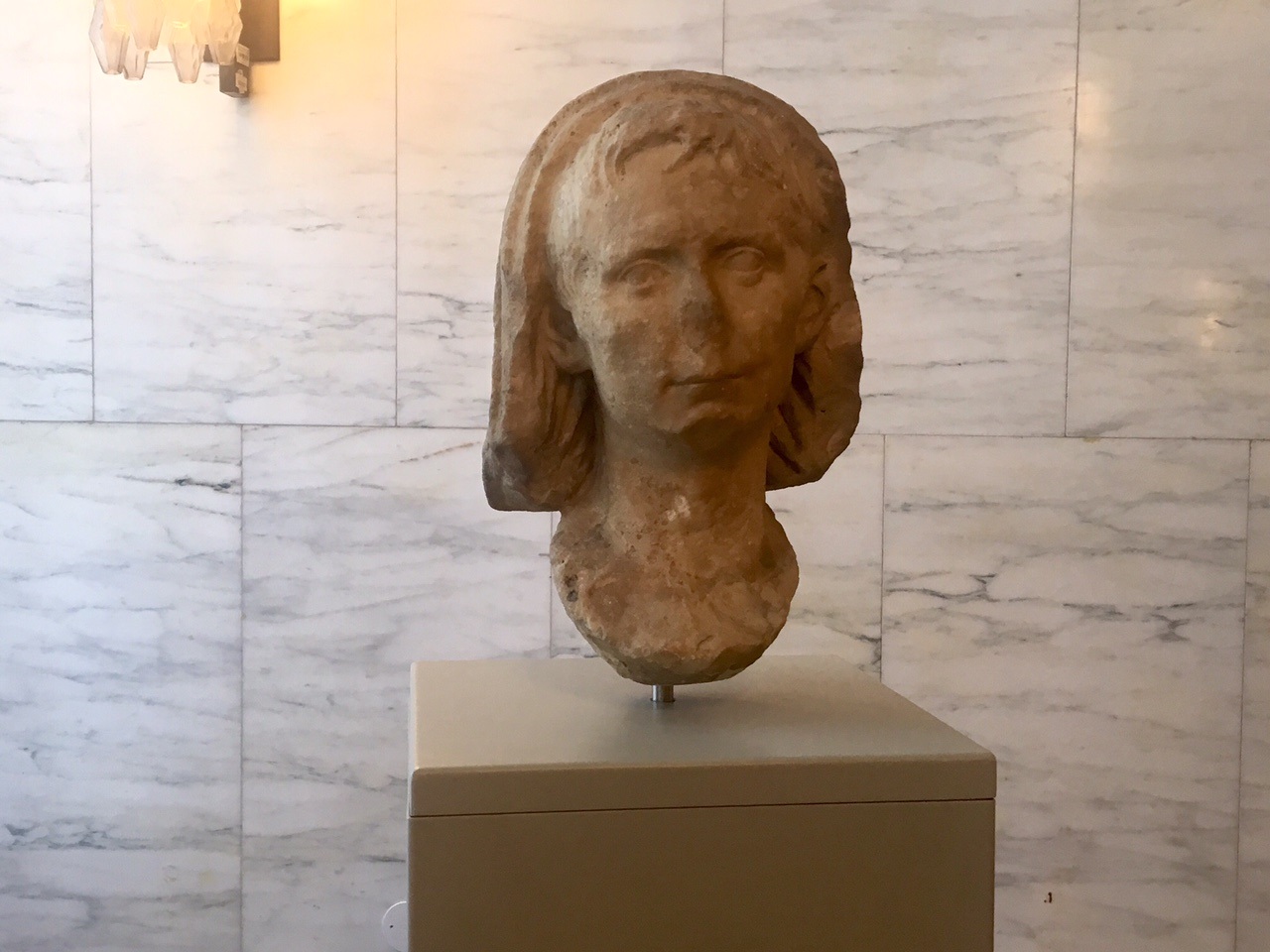 ROME, ITALY—Reuters reports
that the Cinquantenaire Museum in Brussels has repatriated a sculpture
of Rome’s first emperor that it purchased in 1975 from an antiquities
dealer in Zurich. Art historians say the veiled head resembles another
in the town of Nepi's museum, and was probably part of a statue of a
young man wearing a toga. Now known as the “Augusto di Nepi,” the
sculpture is thought to depict the young Octavius before he became
emperor of Rome around 27 B.C. “After more than 40 years of exile in
Europe, he’s finally home. Welcome back Augustus,” said Nepi mayor
Pietro Soldatelli.
ROME, ITALY—Reuters reports
that the Cinquantenaire Museum in Brussels has repatriated a sculpture
of Rome’s first emperor that it purchased in 1975 from an antiquities
dealer in Zurich. Art historians say the veiled head resembles another
in the town of Nepi's museum, and was probably part of a statue of a
young man wearing a toga. Now known as the “Augusto di Nepi,” the
sculpture is thought to depict the young Octavius before he became
emperor of Rome around 27 B.C. “After more than 40 years of exile in
Europe, he’s finally home. Welcome back Augustus,” said Nepi mayor
Pietro Soldatelli.Roman Silver Hoard Discovered in Scotland
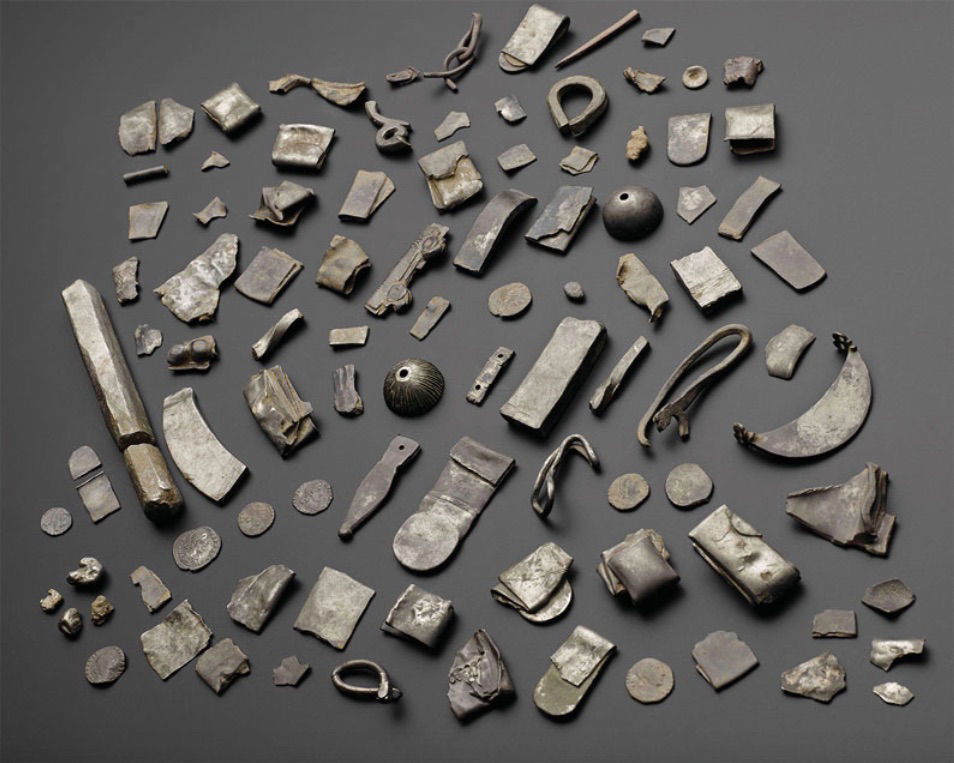 EDINBURGH, SCOTLAND—Researchers led by Gordon Noble of the University of
Aberdeen returned to a farmer’s field in northeastern Scotland where a
hand pin, chain, and spiral bangle all made of silver in the fourth or
fifth centuries A.D. had been found more than 170 years ago. According
to a report in Live Science,
on the second day of the investigation, the team, which had the
assistance of metal detectorists, found three Roman silver coins, a
silver strap end, a piece of a silver bracelet, and pieces of hack
silver. Over a period of 18 months, they gathered a total of 100
artifacts, now known as the Gaulcross Hoard. The pieces are thought to
have been high-status objects imported from the Roman world. The
research team suggests that the items in the hoard had been collect by
non-Romans, such as the Picts, through looting, trade, bribes, or as
military pay. Noble adds that the chunks of silver may even have served
as currency.
EDINBURGH, SCOTLAND—Researchers led by Gordon Noble of the University of
Aberdeen returned to a farmer’s field in northeastern Scotland where a
hand pin, chain, and spiral bangle all made of silver in the fourth or
fifth centuries A.D. had been found more than 170 years ago. According
to a report in Live Science,
on the second day of the investigation, the team, which had the
assistance of metal detectorists, found three Roman silver coins, a
silver strap end, a piece of a silver bracelet, and pieces of hack
silver. Over a period of 18 months, they gathered a total of 100
artifacts, now known as the Gaulcross Hoard. The pieces are thought to
have been high-status objects imported from the Roman world. The
research team suggests that the items in the hoard had been collect by
non-Romans, such as the Picts, through looting, trade, bribes, or as
military pay. Noble adds that the chunks of silver may even have served
as currency.Solar Boat Timbers Removed from Giza Plateau Pit
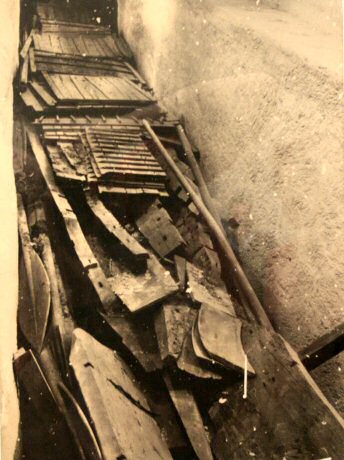 CAIRO, EGYPT—Conservators are restoring a second solar boat discovered
in 1954 in a pit beside the Great Pyramid of Khufu. The first boat was
found dismantled but arranged to resemble a boat, and was reconstructed.
A Japanese-Egyptian team began the restoration of the second boat in
2009. So far, they say they have documented and removed 700 of the 1,200
pieces of the boat from the pit’s 13 levels. Eissa Zidan, supervisor of
the restoration work, told Ahram Online
that the solar boats each had two shrines—one for the pharaoh at the
rear of the boat, and one for the captain, at the front of the boat.
Timbers removed from the pit recently may be the floors to the captain’s
shrine. “This is a great step forward in the conservation of Khufu’s
second boat,” Zidan said.
CAIRO, EGYPT—Conservators are restoring a second solar boat discovered
in 1954 in a pit beside the Great Pyramid of Khufu. The first boat was
found dismantled but arranged to resemble a boat, and was reconstructed.
A Japanese-Egyptian team began the restoration of the second boat in
2009. So far, they say they have documented and removed 700 of the 1,200
pieces of the boat from the pit’s 13 levels. Eissa Zidan, supervisor of
the restoration work, told Ahram Online
that the solar boats each had two shrines—one for the pharaoh at the
rear of the boat, and one for the captain, at the front of the boat.
Timbers removed from the pit recently may be the floors to the captain’s
shrine. “This is a great step forward in the conservation of Khufu’s
second boat,” Zidan said.An Update From Cambodia’s Lidar Campaign
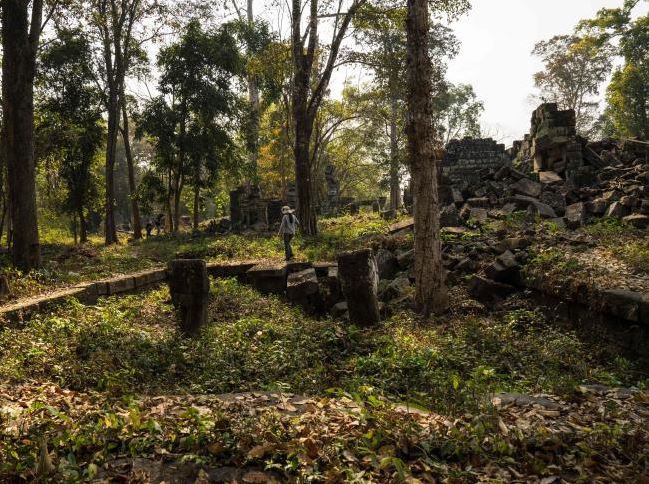
SIEM REAP, CAMBODIA—According to a report in The Guardian,
analysis of data collected last year with lidar (light detection and
ranging) technology over a 734-square-mile area reveals the extent of
multiple cities, iron smelting sites, and a system of waterways that
surrounded Angkor Wat and other medieval temple complexes built by the
Khmer Empire. The results of the study, led by Australian archaeologist
Damian Evans of the École Française d’Extrême-Orient and the Cambodian
Archaeological Lidar Initiative, suggest that Mahendraparvata,
discovered in 2012 beneath Mount Kulen, was larger than had been
previously thought. Evans’ team also discovered a city surrounding the
archaeological site of Preah Khan of Kompong Svay. In addition, the
researchers expect that the lidar information will help them understand
what has been thought of as the collapse of Angkor. “There’s an idea
that somehow the Thais invaded and everyone fled down south—that didn’t
happen, there are no cities [revealed by the aerial survey] that they
fled to. It calls into question the whole notion of an Angkorian
collapse,” Evans said.
Ship Sheds of Ancient Naval Bases Found in Greece
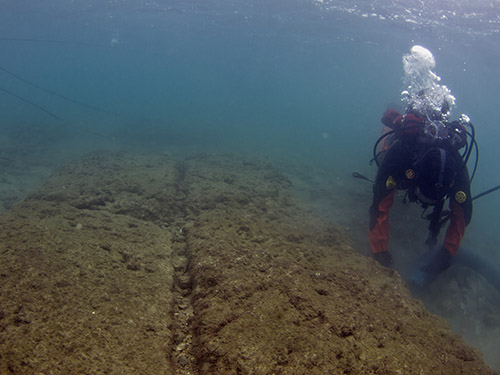
COPENHAGEN, DENMARK—Haaretz
reports that the Zea Harbor Project mapped the remains of ancient Greek
naval bases in Mounichia Harbor and Zea Harbor between 2001 and 2012.
The team of archaeologists, working on land and under water, has found
massive fortifications and a total of 15 structures that were used to
house ships when they were pulled ashore. “It is an enticing thought
that some of the Athenian triremes that fought against the Persians at
Salamis in 480 B.C. were most probably housed in these ship-sheds,” said
project director Bjørn Lovén of the Danish Institute at Athens. The
foundations for the sheds measured more than four feet wide and stood
more than 160 feet long and 20 feet talla.
Lead Sling Bullets May Have “Whistled” During Battle
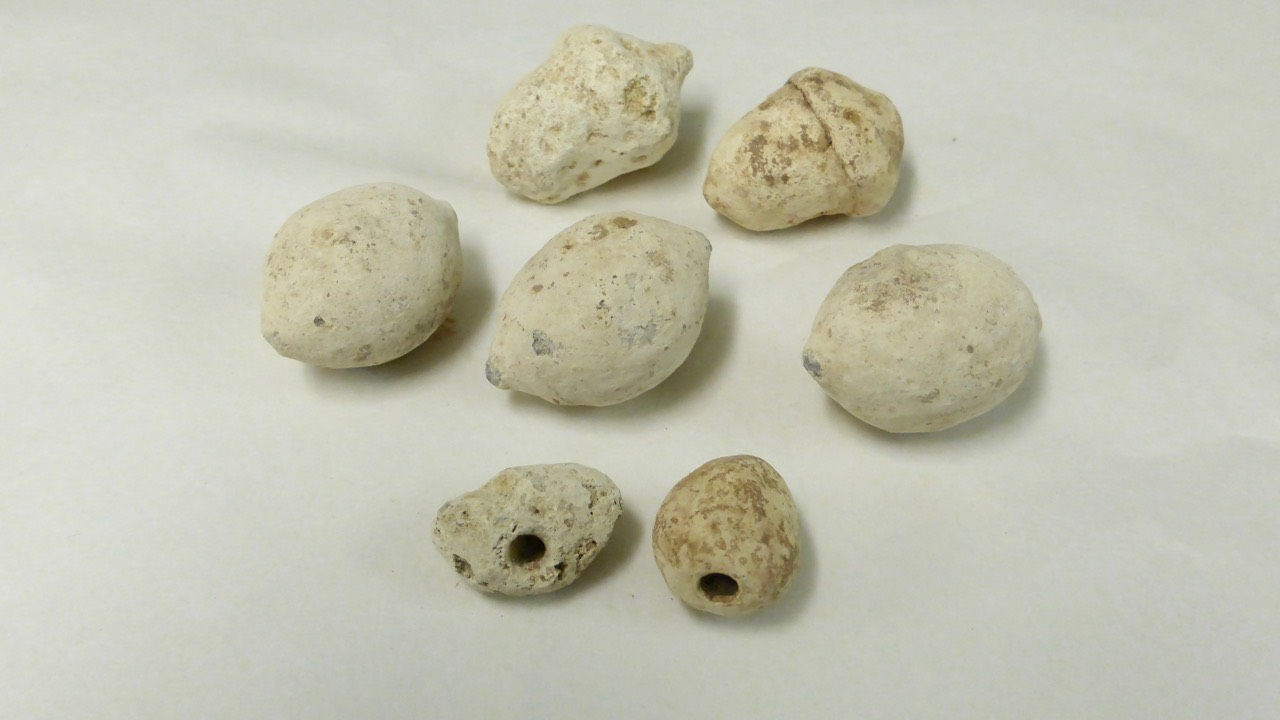 DUMFRIESSHIRE, SCOTLAND—Cast-lead sling bullets recently unearthed in
southwestern Scotland are thought to have been used by Roman auxiliary
troops during an attack of a fort on Burnswark Hill some 1,800 years
ago. Such sling bullets range in size from an acorn to a lemon. About 20
percent of the sling bullets recovered from the site had been drilled
with a small hole. Similar sling bullets have been found at ancient
battle sites in Greece, and at first, researchers thought the small
holes might have contained poison. Now archaeologist John Reid of the
Trimontium Trust thinks the projectiles with holes might have produced a
whistling sound intended to terrify opponents, since his brother
pointed out that lead weights used for casting fishing lines can produce
a whistle in flight. “We think it was an all-out assault on the
hilltop, to demonstrate to the natives what would happen to them if they
resisted,” Reid said in a Live Science
report. His team thinks the small bullets, shot in groups of three or
four from a pouch attached to two long cords, were used for close-range
fighting.
DUMFRIESSHIRE, SCOTLAND—Cast-lead sling bullets recently unearthed in
southwestern Scotland are thought to have been used by Roman auxiliary
troops during an attack of a fort on Burnswark Hill some 1,800 years
ago. Such sling bullets range in size from an acorn to a lemon. About 20
percent of the sling bullets recovered from the site had been drilled
with a small hole. Similar sling bullets have been found at ancient
battle sites in Greece, and at first, researchers thought the small
holes might have contained poison. Now archaeologist John Reid of the
Trimontium Trust thinks the projectiles with holes might have produced a
whistling sound intended to terrify opponents, since his brother
pointed out that lead weights used for casting fishing lines can produce
a whistle in flight. “We think it was an all-out assault on the
hilltop, to demonstrate to the natives what would happen to them if they
resisted,” Reid said in a Live Science
report. His team thinks the small bullets, shot in groups of three or
four from a pouch attached to two long cords, were used for close-range
fighting.East Africa’s Vegetation Changes Detected in Marine Sediments
 NEW YORK, NEW YORK—Climate change and the appearance of grasslands
coincided with the evolution of the first hominins, according to a study
led by Kevin Uno of Columbia University’s Lamont-Doherty Earth
Observatory. He and his team collected sediment cores dating back 24
million years from the bottom of the Red Sea and the western Indian
Ocean. Analysis of the chemicals in the sediments suggests that plants
that grew in East Africa, where the first hominins are thought to have
evolved, blew out to sea and sank. More than ten million years ago,
those plants came from dense forests. Chemicals linked to grasses slowly
began to appear in later layers of sediment. “This now gives us a
timeline for the development of those grasses, and tells us they were
part of our evolution from the very beginning,” Uno said in a UPI report.
NEW YORK, NEW YORK—Climate change and the appearance of grasslands
coincided with the evolution of the first hominins, according to a study
led by Kevin Uno of Columbia University’s Lamont-Doherty Earth
Observatory. He and his team collected sediment cores dating back 24
million years from the bottom of the Red Sea and the western Indian
Ocean. Analysis of the chemicals in the sediments suggests that plants
that grew in East Africa, where the first hominins are thought to have
evolved, blew out to sea and sank. More than ten million years ago,
those plants came from dense forests. Chemicals linked to grasses slowly
began to appear in later layers of sediment. “This now gives us a
timeline for the development of those grasses, and tells us they were
part of our evolution from the very beginning,” Uno said in a UPI report.Scientists Unearth Macaque “Tools” in Thailand
 OXFORD, ENGLAND—The wild macaques of coastal Thailand have been using stones as tools for generations, according to a UPI
report. Scientists led by Michael Haslam of the University of Oxford
observed the monkeys searching for good stones and using them to process
oysters, snails, nuts, and crabs. When particular stones worked well,
the monkeys placed them near the boulders where they preferred to eat.
The researchers then examined the marks on the stones and excavated the
area to look for similar ones. They found identical marks on stones in a
layer with oyster shells that were carbon-dated to between ten and 50
years ago. “As we build up a fuller picture of their evolutionary
history, we will start to identify the similarities and differences in
human behavior and that of other primates,” Haslam explained.
OXFORD, ENGLAND—The wild macaques of coastal Thailand have been using stones as tools for generations, according to a UPI
report. Scientists led by Michael Haslam of the University of Oxford
observed the monkeys searching for good stones and using them to process
oysters, snails, nuts, and crabs. When particular stones worked well,
the monkeys placed them near the boulders where they preferred to eat.
The researchers then examined the marks on the stones and excavated the
area to look for similar ones. They found identical marks on stones in a
layer with oyster shells that were carbon-dated to between ten and 50
years ago. “As we build up a fuller picture of their evolutionary
history, we will start to identify the similarities and differences in
human behavior and that of other primates,” Haslam explained.Researchers Decipher Antikythera Mechanism Text
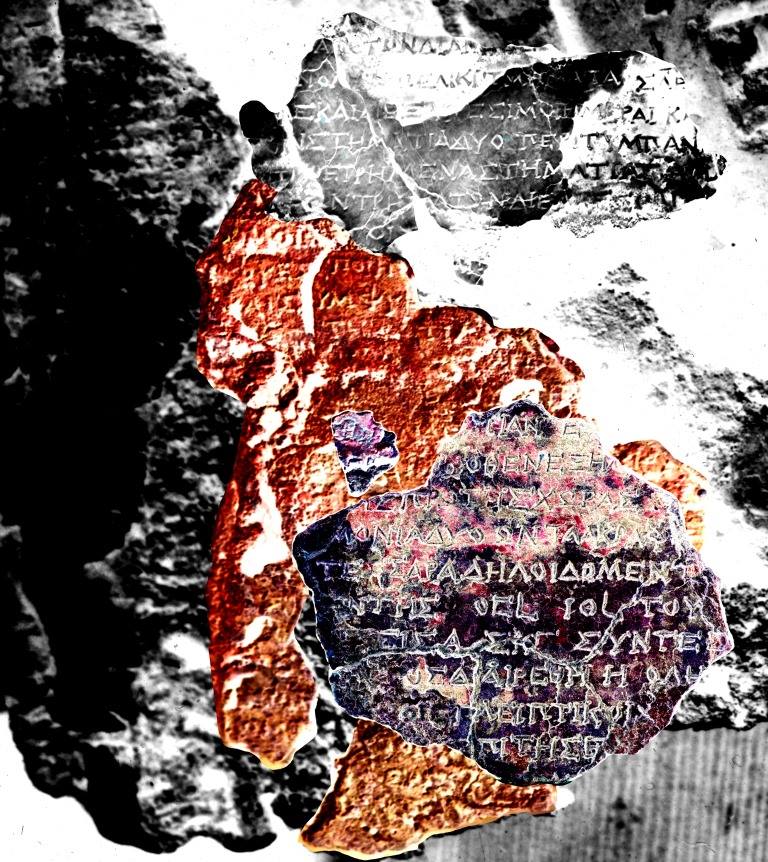 ATHENS, GREECE—Using X-ray scanning equipment and imaging technology, an
international team of scientists has read most of the explanatory text
engraved in tiny letters on the known surviving fragments of the
Antikythera Mechanism. Mike Edmunds of Cardiff University said that the
text does not instruct the reader on the use of the device, but is more
like a descriptive label. The artifact, recovered from a first-century
B.C. shipwreck off the coast of a Greek island in the early years of the
twentieth century, is made up of bronze gears and plates, and was
probably encased in wood and operated with a hand crank. It is thought
to have functioned as an astronomical instrument to track the position
of the sun, the phases of the moon, the positions of the planets, and
the timing of eclipses. “It’s like a textbook of astronomy as it was
understood then, which connected the movements of the sky and the
planets with the lives of the ancient Greeks and their environment,”
Alexander Jones of New York University said in an Associated Press report. Investigators have returned to the shipwreck to look for more pieces of the device.
ATHENS, GREECE—Using X-ray scanning equipment and imaging technology, an
international team of scientists has read most of the explanatory text
engraved in tiny letters on the known surviving fragments of the
Antikythera Mechanism. Mike Edmunds of Cardiff University said that the
text does not instruct the reader on the use of the device, but is more
like a descriptive label. The artifact, recovered from a first-century
B.C. shipwreck off the coast of a Greek island in the early years of the
twentieth century, is made up of bronze gears and plates, and was
probably encased in wood and operated with a hand crank. It is thought
to have functioned as an astronomical instrument to track the position
of the sun, the phases of the moon, the positions of the planets, and
the timing of eclipses. “It’s like a textbook of astronomy as it was
understood then, which connected the movements of the sky and the
planets with the lives of the ancient Greeks and their environment,”
Alexander Jones of New York University said in an Associated Press report. Investigators have returned to the shipwreck to look for more pieces of the device.Sunday, 26 June 2016
Monumental Structure Found at Petra with Satellite Images
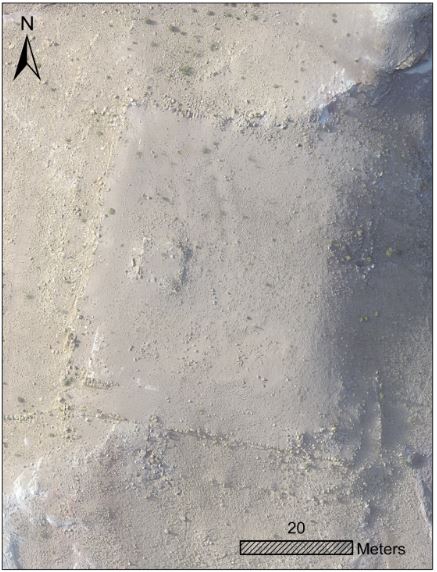 BIRMINGHAM, ALABAMA—Sarah Parcak of the University of Alabama at
Birmingham, and Christopher Tuttle, executive director of the Council of
American Overseas Research Centers, spotted a monumental structure at
Petra, a 2,500-year-old Nabatean city in southern Jordan, using
high-resolution satellite imagery and pictures taken with aerial drones.
National Geographic
reports that the structure consists of a building measuring roughly 28
feet square, centered on a rectangular, paved platform, surrounded by a
larger, 184-by-161-foot, platform. The building faced a row of columns
and a staircase to the east. Pottery recovered from the site dates to
the mid-second century B.C. Parcak and Tuttle say that the platform’s
design is unique in the ancient city, and may have been used for
ceremonial purposes in the early days of the settlement. “I’ve worked in
Petra for 20 years, and I knew that something was there, but it’s certainly legitimate to call this a discovery,” Tuttle said.
BIRMINGHAM, ALABAMA—Sarah Parcak of the University of Alabama at
Birmingham, and Christopher Tuttle, executive director of the Council of
American Overseas Research Centers, spotted a monumental structure at
Petra, a 2,500-year-old Nabatean city in southern Jordan, using
high-resolution satellite imagery and pictures taken with aerial drones.
National Geographic
reports that the structure consists of a building measuring roughly 28
feet square, centered on a rectangular, paved platform, surrounded by a
larger, 184-by-161-foot, platform. The building faced a row of columns
and a staircase to the east. Pottery recovered from the site dates to
the mid-second century B.C. Parcak and Tuttle say that the platform’s
design is unique in the ancient city, and may have been used for
ceremonial purposes in the early days of the settlement. “I’ve worked in
Petra for 20 years, and I knew that something was there, but it’s certainly legitimate to call this a discovery,” Tuttle said.5,000-Year-Old Livestock Pen Examined in Spain
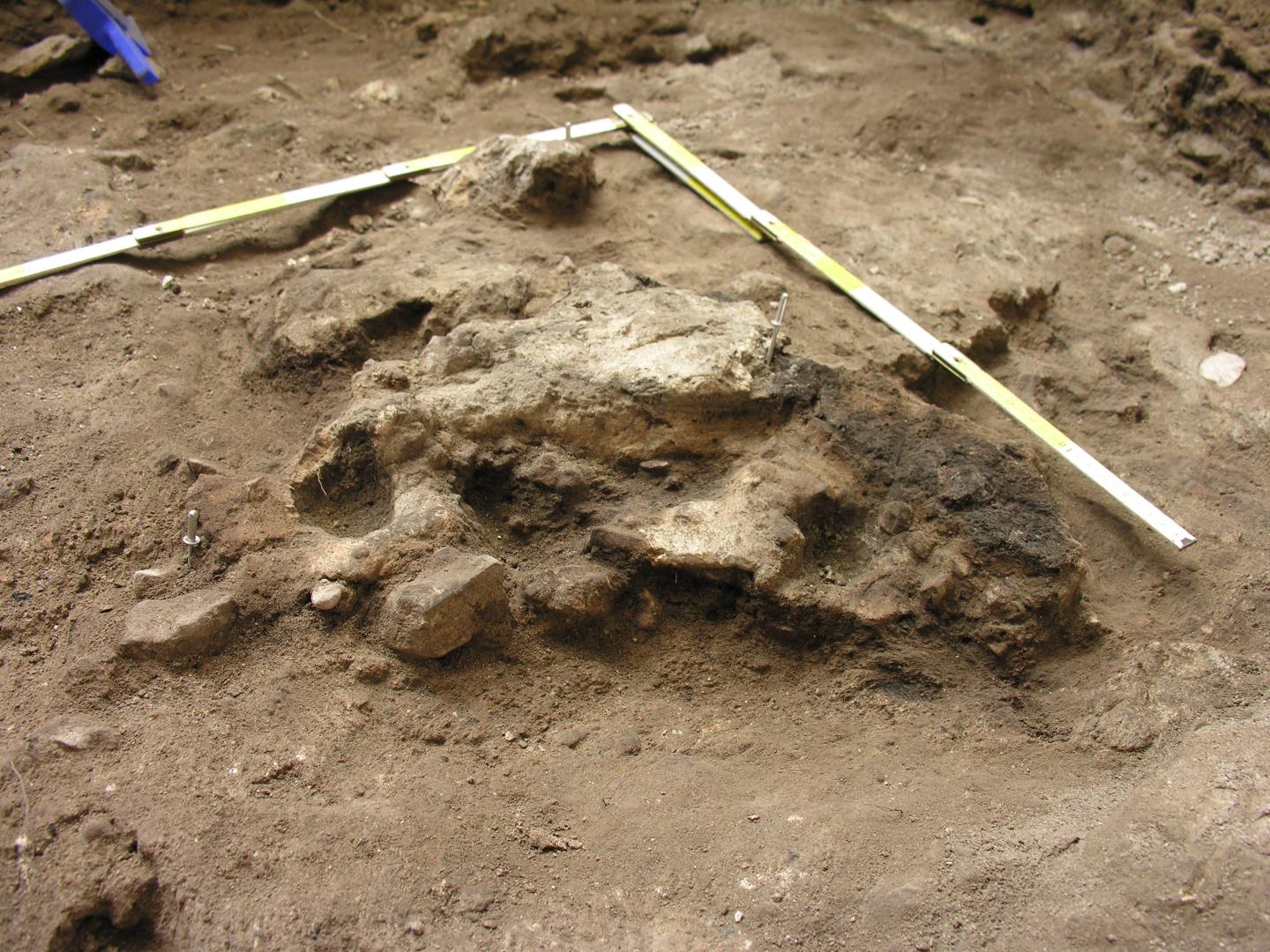 BARCELONA, SPAIN—A rock shelter in the Sierra de Cantabria mountains in
northern Spain was repeatedly used as an animal pen some 5,000 years
ago, according to a study conducted by scientists from the University of
Barcelona, the University of the Basque Country, and the Spanish
National Research Council. Analysis of charcoal, pollen, seeds, and
other plant remains recovered during the investigation indicate that
Copper Age herders held their goats and/or sheep in the rock shelter
intermittently, probably to take advantage of hazelnut and acorn trees
that grew in the area. “We also know thanks to the microscopic study of
the sediments that every now and again they used to burn the debris that
had built up, probably to clean up the space that had been occupied,”
archaeologist Ana Polo-Diaz of the University of the Basque Country said
in a UPI report.
BARCELONA, SPAIN—A rock shelter in the Sierra de Cantabria mountains in
northern Spain was repeatedly used as an animal pen some 5,000 years
ago, according to a study conducted by scientists from the University of
Barcelona, the University of the Basque Country, and the Spanish
National Research Council. Analysis of charcoal, pollen, seeds, and
other plant remains recovered during the investigation indicate that
Copper Age herders held their goats and/or sheep in the rock shelter
intermittently, probably to take advantage of hazelnut and acorn trees
that grew in the area. “We also know thanks to the microscopic study of
the sediments that every now and again they used to burn the debris that
had built up, probably to clean up the space that had been occupied,”
archaeologist Ana Polo-Diaz of the University of the Basque Country said
in a UPI report.New Flores Fossils May Be Hobbit Ancestors
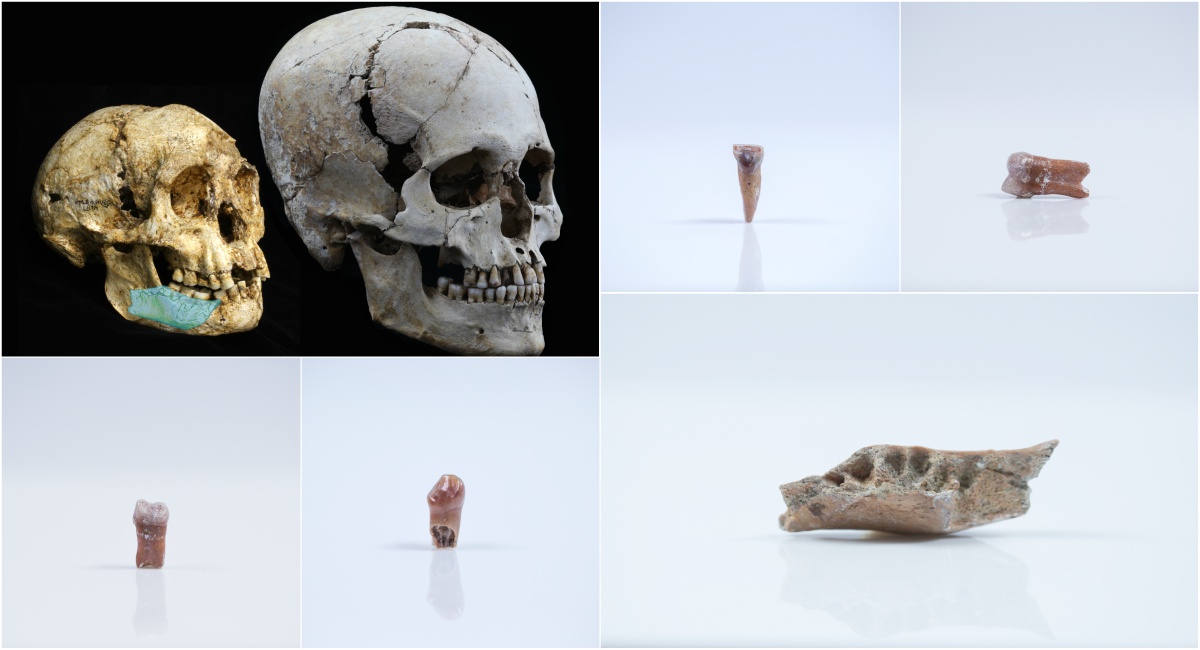 WOLLONGONG, AUSTRALIA—Six teeth and a jawbone fragment thought to belong to ancestors of Homo floresiensis,
the hominin often referred to as the "hobbit," have been discovered at a
site called Mata Menge on the Indonesian island of Flores. The fossils
represent at least one adult and two children of small stature who lived
600,000 years earlier than Homo floresiensis. Gert van den Bergh of the University of Wollongong and colleagues argue that this ancient human relative descended from Homo erectus
individuals who arrived on the island and shrank over a period of about
300,000 years, perhaps because they were challenged by few predators
and thus did not have a need for a big brain. “But what is clear is that
they made stone tools, so they weren’t stupid,” van den Bergh said in
an ABC News report. He
recovered the fossils from an ancient riverbed that had been covered
and preserved by a volcanic mudflow. His team will continue to look for
additional fossils, such as wrist bones and skulls, for more information
on possible Homo floresiensis ancestors.
WOLLONGONG, AUSTRALIA—Six teeth and a jawbone fragment thought to belong to ancestors of Homo floresiensis,
the hominin often referred to as the "hobbit," have been discovered at a
site called Mata Menge on the Indonesian island of Flores. The fossils
represent at least one adult and two children of small stature who lived
600,000 years earlier than Homo floresiensis. Gert van den Bergh of the University of Wollongong and colleagues argue that this ancient human relative descended from Homo erectus
individuals who arrived on the island and shrank over a period of about
300,000 years, perhaps because they were challenged by few predators
and thus did not have a need for a big brain. “But what is clear is that
they made stone tools, so they weren’t stupid,” van den Bergh said in
an ABC News report. He
recovered the fossils from an ancient riverbed that had been covered
and preserved by a volcanic mudflow. His team will continue to look for
additional fossils, such as wrist bones and skulls, for more information
on possible Homo floresiensis ancestors.Revolutionary War Encampment Identified in Connecticut
REDDING, CONNECTICUT—Archaeologists Beth Morrison and Laurie Weinstein
of Western Connecticut State University and their students surveyed a
possible Revolutionary War–era encampment in Redding, Connecticut, and
concluded that the site was likely home to 1,000 to 1,500 Connecticut
soldiers during the winter of 1779. Known as the Middle Encampment, the
site was under the command of General Samuel Holden Parsons. Twelve
collapsed fireplaces and other piles of rocks are thought to mark the
locations of cabins and other outbuildings. A layer of burned animal
bone at the site is similar to debris found at nearby Putnam Park, where
soldiers from New Hampshire and Canada camped under the command of
Major General Israel Putnam over the same winter. The investigators also
recovered military buttons, shoe buckles, and musket balls. “We’re
happy to say that every single [site] we put a hole into came up with a
period-specific artifact,” Morrison said in a report by The Redding Pilot.
The site of a third Revolutionary War encampment in the region has been
lost to development. The Middle Encampment has been named a state
archaeological preserve.
Tracking Paleocoastal People in California’s Channel Islands
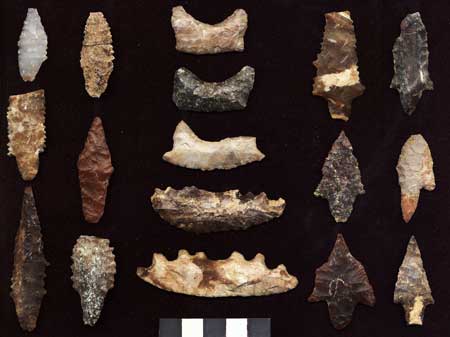 EUGENE, OREGON—Western Digs
reports that archaeologist Jon Erlandson of the University of Oregon
and his team predicted where they would find stone artifacts left behind
by early seafaring people on Santa Cruz Island by analyzing the
attributes of known Paleocoastal sites in the Channel Islands. They
looked for areas with natural shelter, access to rocks and fresh water,
and a view of the coastline. “We added overlook sites later as our
surveys revealed that they, too, were important,” Erlandson said. In
fact, two of the new sites were discovered on high bluffs overlooking
the ocean. Erlandson thinks the ancient mariners valued the commanding
views for spotting seals and sea lions, and maybe even other people. One
of the sites has been carbon-dated to about 8,500 years ago with
cast-off mussel shells. The types of tools at the other two sites
suggest that they may be 11,000 or 12,000 years old.
EUGENE, OREGON—Western Digs
reports that archaeologist Jon Erlandson of the University of Oregon
and his team predicted where they would find stone artifacts left behind
by early seafaring people on Santa Cruz Island by analyzing the
attributes of known Paleocoastal sites in the Channel Islands. They
looked for areas with natural shelter, access to rocks and fresh water,
and a view of the coastline. “We added overlook sites later as our
surveys revealed that they, too, were important,” Erlandson said. In
fact, two of the new sites were discovered on high bluffs overlooking
the ocean. Erlandson thinks the ancient mariners valued the commanding
views for spotting seals and sea lions, and maybe even other people. One
of the sites has been carbon-dated to about 8,500 years ago with
cast-off mussel shells. The types of tools at the other two sites
suggest that they may be 11,000 or 12,000 years old.
Subscribe to:
Posts (Atom)