Showing posts with label GREECE. Show all posts

Wednesday, 29 June 2016

Ship Sheds of Ancient Naval Bases Found in Greece

Athens naval base
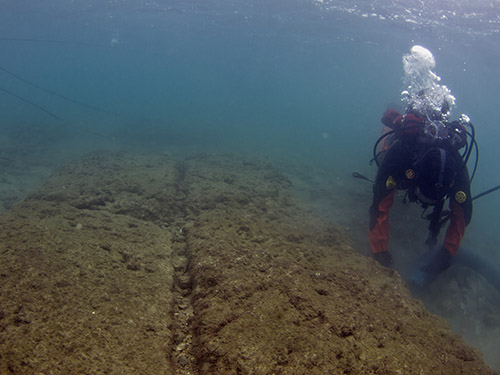
COPENHAGEN, DENMARK—Haaretz reports that the Zea Harbor Project mapped the remains of ancient Greek naval bases in Mounichia Harbor and Zea Harbor between 2001 and 2012. The team of archaeologists, working on land and under water, has found massive fortifications and a total of 15 structures that were used to house ships when they were pulled ashore. “It is an enticing thought that some of the Athenian triremes that fought against the Persians at Salamis in 480 B.C. were most probably housed in these ship-sheds,” said project director Bjørn Lovén of the Danish Institute at Athens. The foundations for the sheds measured more than four feet wide and stood more than 160 feet long and 20 feet talla.

Researchers Decipher Antikythera Mechanism Text

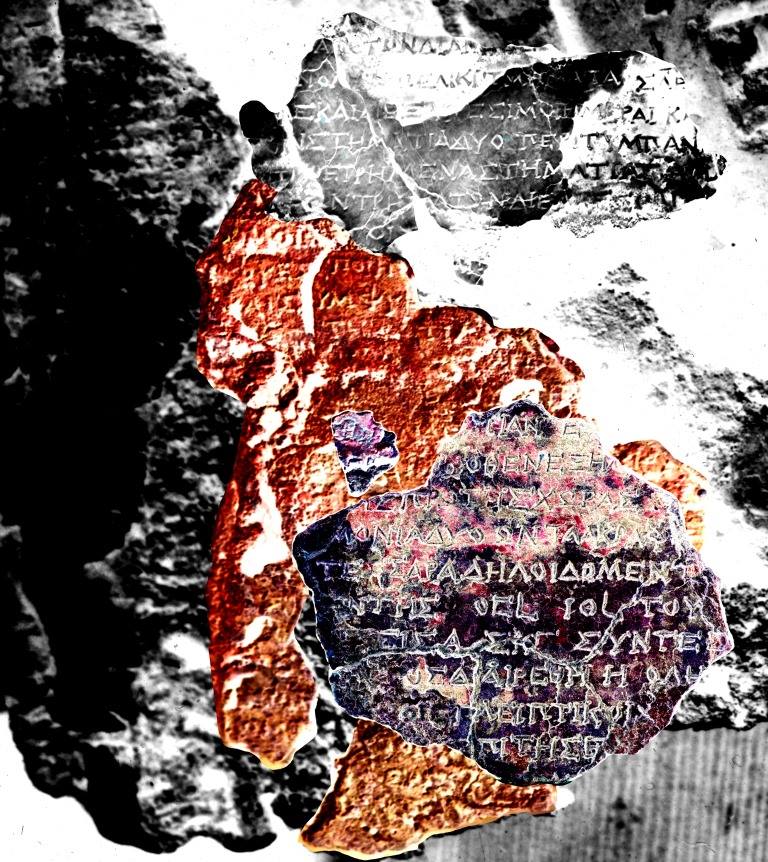
Anitkythera text colorATHENS, GREECE—Using X-ray scanning equipment and imaging technology, an international team of scientists has read most of the explanatory text engraved in tiny letters on the known surviving fragments of the Antikythera Mechanism. Mike Edmunds of Cardiff University said that the text does not instruct the reader on the use of the device, but is more like a descriptive label. The artifact, recovered from a first-century B.C. shipwreck off the coast of a Greek island in the early years of the twentieth century, is made up of bronze gears and plates, and was probably encased in wood and operated with a hand crank. It is thought to have functioned as an astronomical instrument to  track the position of the sun, the phases of the moon, the positions of the planets, and the timing of eclipses. “It’s like a textbook of astronomy as it was understood then, which connected the movements of the sky and the planets with the lives of the ancient Greeks and their environment,” Alexander Jones of New York University said in an Associated Press report. Investigators have returned to the shipwreck to look for more pieces of the device.