STROMNESS, SCOTLAND—According to a report in The Orcadian,
a figurine unearthed on the largest of the Orkney Islands in the 1860s
has been rediscovered in a box at Stromness Museum. Dubbed the “Skara
Brae Buddo,” the figurine had been packed away among artifacts from
Skaill House, a historic manor overlooking the Neolithic site of Skara
Brae, since the 1930s. The 5,000-year-old figurine, carved from a piece
of whalebone, was originally found in the remains of a house in the
Neolithic village. Modern scholars only knew of the sculpture, which has
eyes and a mouth cut in its face and a navel in its body, from a sketch
in the nineteenth-century notebooks kept by antiquarian George Petrie.
Researchers think the holes in the carving may have been used to suspend
it.
Showing posts with label SCOTLAND. Show all posts
Showing posts with label SCOTLAND. Show all posts
Wednesday, 29 June 2016

Roman Silver Hoard Discovered in Scotland
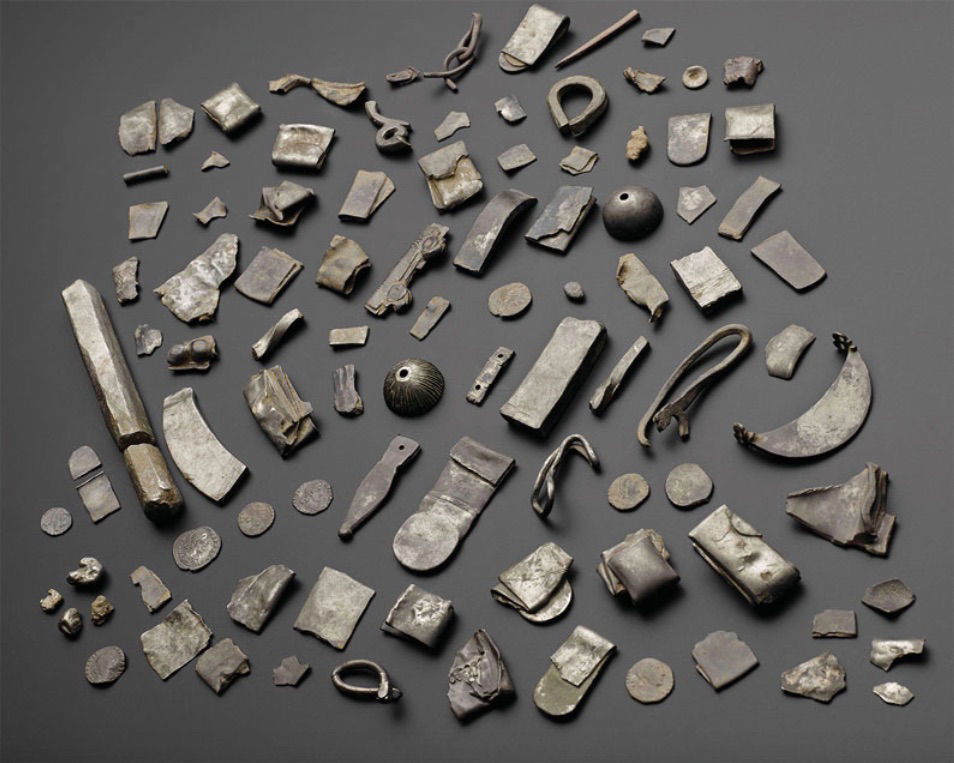 EDINBURGH, SCOTLAND—Researchers led by Gordon Noble of the University of
Aberdeen returned to a farmer’s field in northeastern Scotland where a
hand pin, chain, and spiral bangle all made of silver in the fourth or
fifth centuries A.D. had been found more than 170 years ago. According
to a report in Live Science,
on the second day of the investigation, the team, which had the
assistance of metal detectorists, found three Roman silver coins, a
silver strap end, a piece of a silver bracelet, and pieces of hack
silver. Over a period of 18 months, they gathered a total of 100
artifacts, now known as the Gaulcross Hoard. The pieces are thought to
have been high-status objects imported from the Roman world. The
research team suggests that the items in the hoard had been collect by
non-Romans, such as the Picts, through looting, trade, bribes, or as
military pay. Noble adds that the chunks of silver may even have served
as currency.
EDINBURGH, SCOTLAND—Researchers led by Gordon Noble of the University of
Aberdeen returned to a farmer’s field in northeastern Scotland where a
hand pin, chain, and spiral bangle all made of silver in the fourth or
fifth centuries A.D. had been found more than 170 years ago. According
to a report in Live Science,
on the second day of the investigation, the team, which had the
assistance of metal detectorists, found three Roman silver coins, a
silver strap end, a piece of a silver bracelet, and pieces of hack
silver. Over a period of 18 months, they gathered a total of 100
artifacts, now known as the Gaulcross Hoard. The pieces are thought to
have been high-status objects imported from the Roman world. The
research team suggests that the items in the hoard had been collect by
non-Romans, such as the Picts, through looting, trade, bribes, or as
military pay. Noble adds that the chunks of silver may even have served
as currency.Lead Sling Bullets May Have “Whistled” During Battle
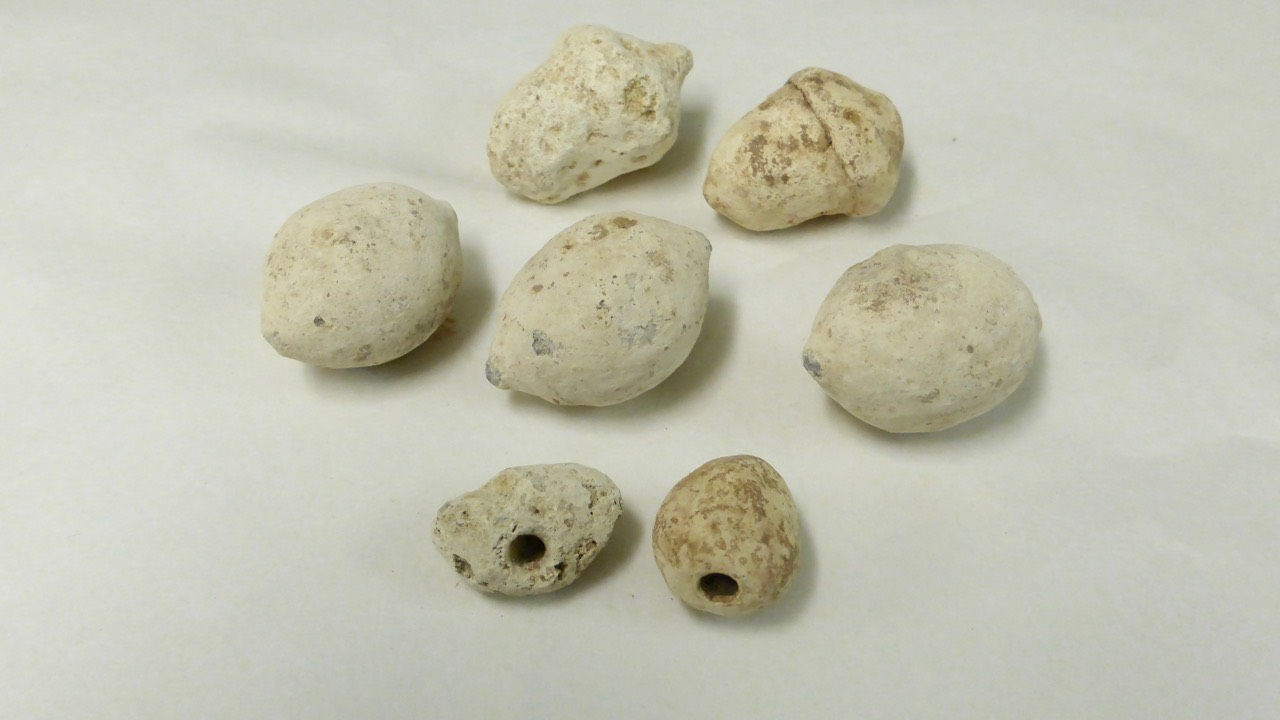 DUMFRIESSHIRE, SCOTLAND—Cast-lead sling bullets recently unearthed in
southwestern Scotland are thought to have been used by Roman auxiliary
troops during an attack of a fort on Burnswark Hill some 1,800 years
ago. Such sling bullets range in size from an acorn to a lemon. About 20
percent of the sling bullets recovered from the site had been drilled
with a small hole. Similar sling bullets have been found at ancient
battle sites in Greece, and at first, researchers thought the small
holes might have contained poison. Now archaeologist John Reid of the
Trimontium Trust thinks the projectiles with holes might have produced a
whistling sound intended to terrify opponents, since his brother
pointed out that lead weights used for casting fishing lines can produce
a whistle in flight. “We think it was an all-out assault on the
hilltop, to demonstrate to the natives what would happen to them if they
resisted,” Reid said in a Live Science
report. His team thinks the small bullets, shot in groups of three or
four from a pouch attached to two long cords, were used for close-range
fighting.
DUMFRIESSHIRE, SCOTLAND—Cast-lead sling bullets recently unearthed in
southwestern Scotland are thought to have been used by Roman auxiliary
troops during an attack of a fort on Burnswark Hill some 1,800 years
ago. Such sling bullets range in size from an acorn to a lemon. About 20
percent of the sling bullets recovered from the site had been drilled
with a small hole. Similar sling bullets have been found at ancient
battle sites in Greece, and at first, researchers thought the small
holes might have contained poison. Now archaeologist John Reid of the
Trimontium Trust thinks the projectiles with holes might have produced a
whistling sound intended to terrify opponents, since his brother
pointed out that lead weights used for casting fishing lines can produce
a whistle in flight. “We think it was an all-out assault on the
hilltop, to demonstrate to the natives what would happen to them if they
resisted,” Reid said in a Live Science
report. His team thinks the small bullets, shot in groups of three or
four from a pouch attached to two long cords, were used for close-range
fighting.
Subscribe to:
Posts (Atom)