BARCELONA, SPAIN—An excavation led by scientists from the Catalan
Institute of Human Paleo-Ecology and Social Evolution (IPHES) in the La
Mina area at Barranc de la Boella has uncovered 50 flint tools estimated
to be between 800,000 and one million years old. Well-preserved remains
of deer, horses, cattle, rhinoceros, and hyenas were also found, in
addition to hyena coprolites. IPHES researcher Josep Vallverdú told the Catalan News Agency
that the site “contains the oldest files on human evolution in
Catalonia and on the Iberian Peninsula." Plans are being made for the
continued excavation of the site, which is located in the Francolí River
Basin.
Wednesday, 29 June 2016

Belgium Returns Marble Head to Italy
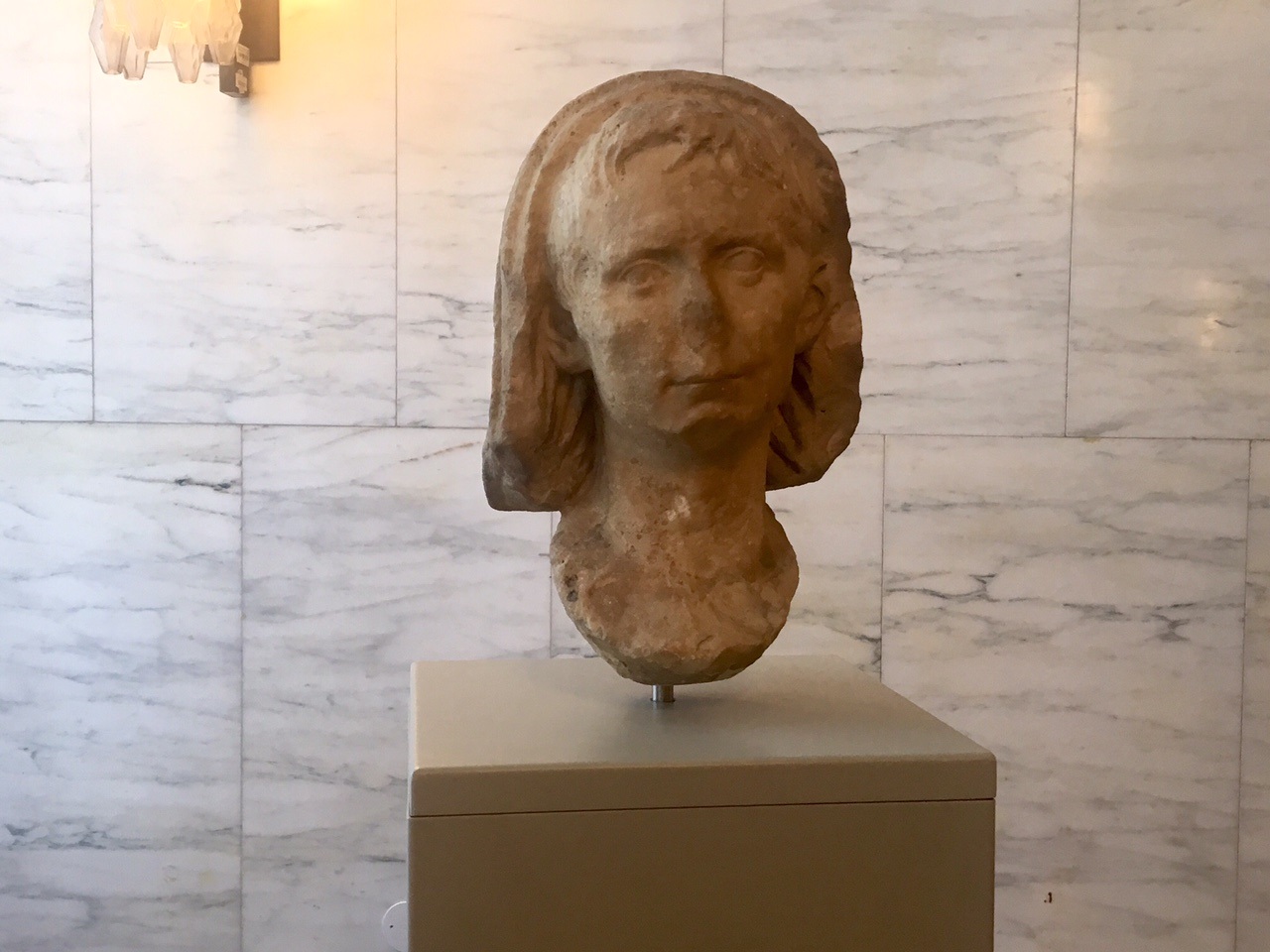 ROME, ITALY—Reuters reports
that the Cinquantenaire Museum in Brussels has repatriated a sculpture
of Rome’s first emperor that it purchased in 1975 from an antiquities
dealer in Zurich. Art historians say the veiled head resembles another
in the town of Nepi's museum, and was probably part of a statue of a
young man wearing a toga. Now known as the “Augusto di Nepi,” the
sculpture is thought to depict the young Octavius before he became
emperor of Rome around 27 B.C. “After more than 40 years of exile in
Europe, he’s finally home. Welcome back Augustus,” said Nepi mayor
Pietro Soldatelli.
ROME, ITALY—Reuters reports
that the Cinquantenaire Museum in Brussels has repatriated a sculpture
of Rome’s first emperor that it purchased in 1975 from an antiquities
dealer in Zurich. Art historians say the veiled head resembles another
in the town of Nepi's museum, and was probably part of a statue of a
young man wearing a toga. Now known as the “Augusto di Nepi,” the
sculpture is thought to depict the young Octavius before he became
emperor of Rome around 27 B.C. “After more than 40 years of exile in
Europe, he’s finally home. Welcome back Augustus,” said Nepi mayor
Pietro Soldatelli.Roman Silver Hoard Discovered in Scotland
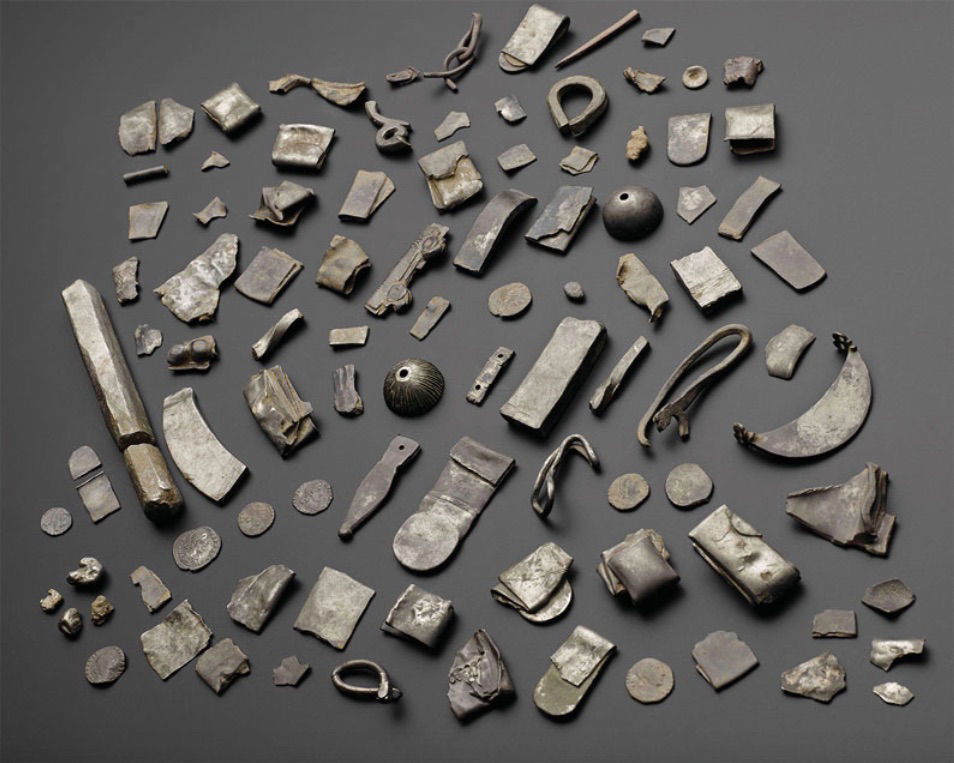 EDINBURGH, SCOTLAND—Researchers led by Gordon Noble of the University of
Aberdeen returned to a farmer’s field in northeastern Scotland where a
hand pin, chain, and spiral bangle all made of silver in the fourth or
fifth centuries A.D. had been found more than 170 years ago. According
to a report in Live Science,
on the second day of the investigation, the team, which had the
assistance of metal detectorists, found three Roman silver coins, a
silver strap end, a piece of a silver bracelet, and pieces of hack
silver. Over a period of 18 months, they gathered a total of 100
artifacts, now known as the Gaulcross Hoard. The pieces are thought to
have been high-status objects imported from the Roman world. The
research team suggests that the items in the hoard had been collect by
non-Romans, such as the Picts, through looting, trade, bribes, or as
military pay. Noble adds that the chunks of silver may even have served
as currency.
EDINBURGH, SCOTLAND—Researchers led by Gordon Noble of the University of
Aberdeen returned to a farmer’s field in northeastern Scotland where a
hand pin, chain, and spiral bangle all made of silver in the fourth or
fifth centuries A.D. had been found more than 170 years ago. According
to a report in Live Science,
on the second day of the investigation, the team, which had the
assistance of metal detectorists, found three Roman silver coins, a
silver strap end, a piece of a silver bracelet, and pieces of hack
silver. Over a period of 18 months, they gathered a total of 100
artifacts, now known as the Gaulcross Hoard. The pieces are thought to
have been high-status objects imported from the Roman world. The
research team suggests that the items in the hoard had been collect by
non-Romans, such as the Picts, through looting, trade, bribes, or as
military pay. Noble adds that the chunks of silver may even have served
as currency.Solar Boat Timbers Removed from Giza Plateau Pit
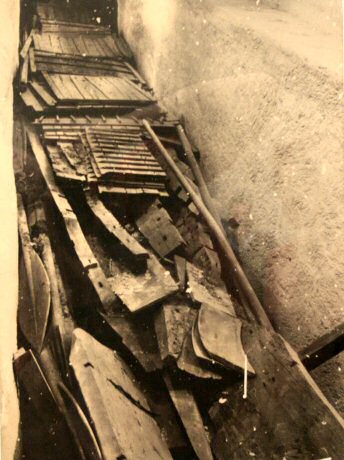 CAIRO, EGYPT—Conservators are restoring a second solar boat discovered
in 1954 in a pit beside the Great Pyramid of Khufu. The first boat was
found dismantled but arranged to resemble a boat, and was reconstructed.
A Japanese-Egyptian team began the restoration of the second boat in
2009. So far, they say they have documented and removed 700 of the 1,200
pieces of the boat from the pit’s 13 levels. Eissa Zidan, supervisor of
the restoration work, told Ahram Online
that the solar boats each had two shrines—one for the pharaoh at the
rear of the boat, and one for the captain, at the front of the boat.
Timbers removed from the pit recently may be the floors to the captain’s
shrine. “This is a great step forward in the conservation of Khufu’s
second boat,” Zidan said.
CAIRO, EGYPT—Conservators are restoring a second solar boat discovered
in 1954 in a pit beside the Great Pyramid of Khufu. The first boat was
found dismantled but arranged to resemble a boat, and was reconstructed.
A Japanese-Egyptian team began the restoration of the second boat in
2009. So far, they say they have documented and removed 700 of the 1,200
pieces of the boat from the pit’s 13 levels. Eissa Zidan, supervisor of
the restoration work, told Ahram Online
that the solar boats each had two shrines—one for the pharaoh at the
rear of the boat, and one for the captain, at the front of the boat.
Timbers removed from the pit recently may be the floors to the captain’s
shrine. “This is a great step forward in the conservation of Khufu’s
second boat,” Zidan said.An Update From Cambodia’s Lidar Campaign
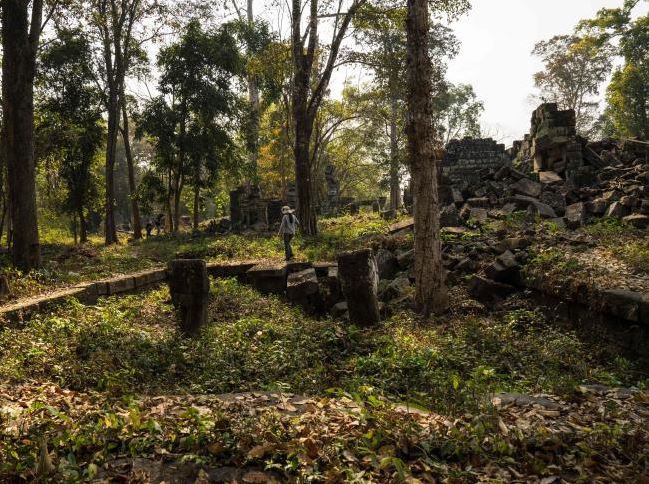
SIEM REAP, CAMBODIA—According to a report in The Guardian,
analysis of data collected last year with lidar (light detection and
ranging) technology over a 734-square-mile area reveals the extent of
multiple cities, iron smelting sites, and a system of waterways that
surrounded Angkor Wat and other medieval temple complexes built by the
Khmer Empire. The results of the study, led by Australian archaeologist
Damian Evans of the École Française d’Extrême-Orient and the Cambodian
Archaeological Lidar Initiative, suggest that Mahendraparvata,
discovered in 2012 beneath Mount Kulen, was larger than had been
previously thought. Evans’ team also discovered a city surrounding the
archaeological site of Preah Khan of Kompong Svay. In addition, the
researchers expect that the lidar information will help them understand
what has been thought of as the collapse of Angkor. “There’s an idea
that somehow the Thais invaded and everyone fled down south—that didn’t
happen, there are no cities [revealed by the aerial survey] that they
fled to. It calls into question the whole notion of an Angkorian
collapse,” Evans said.
Ship Sheds of Ancient Naval Bases Found in Greece
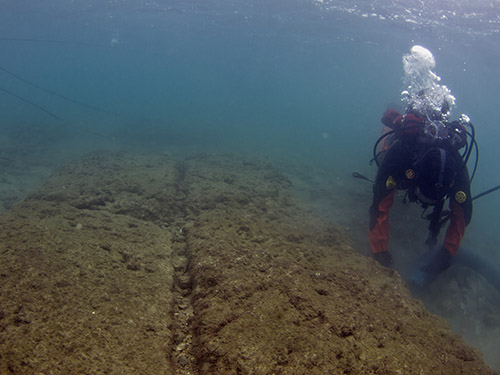
COPENHAGEN, DENMARK—Haaretz
reports that the Zea Harbor Project mapped the remains of ancient Greek
naval bases in Mounichia Harbor and Zea Harbor between 2001 and 2012.
The team of archaeologists, working on land and under water, has found
massive fortifications and a total of 15 structures that were used to
house ships when they were pulled ashore. “It is an enticing thought
that some of the Athenian triremes that fought against the Persians at
Salamis in 480 B.C. were most probably housed in these ship-sheds,” said
project director Bjørn Lovén of the Danish Institute at Athens. The
foundations for the sheds measured more than four feet wide and stood
more than 160 feet long and 20 feet talla.
Lead Sling Bullets May Have “Whistled” During Battle
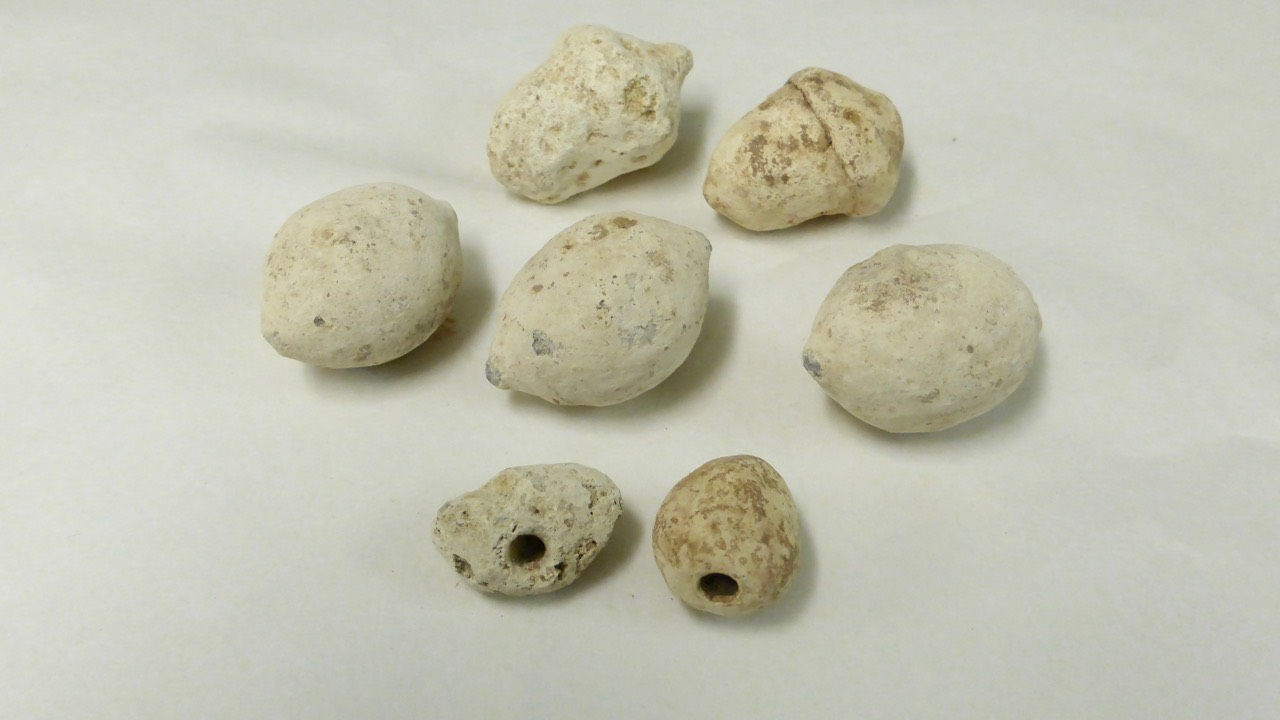 DUMFRIESSHIRE, SCOTLAND—Cast-lead sling bullets recently unearthed in
southwestern Scotland are thought to have been used by Roman auxiliary
troops during an attack of a fort on Burnswark Hill some 1,800 years
ago. Such sling bullets range in size from an acorn to a lemon. About 20
percent of the sling bullets recovered from the site had been drilled
with a small hole. Similar sling bullets have been found at ancient
battle sites in Greece, and at first, researchers thought the small
holes might have contained poison. Now archaeologist John Reid of the
Trimontium Trust thinks the projectiles with holes might have produced a
whistling sound intended to terrify opponents, since his brother
pointed out that lead weights used for casting fishing lines can produce
a whistle in flight. “We think it was an all-out assault on the
hilltop, to demonstrate to the natives what would happen to them if they
resisted,” Reid said in a Live Science
report. His team thinks the small bullets, shot in groups of three or
four from a pouch attached to two long cords, were used for close-range
fighting.
DUMFRIESSHIRE, SCOTLAND—Cast-lead sling bullets recently unearthed in
southwestern Scotland are thought to have been used by Roman auxiliary
troops during an attack of a fort on Burnswark Hill some 1,800 years
ago. Such sling bullets range in size from an acorn to a lemon. About 20
percent of the sling bullets recovered from the site had been drilled
with a small hole. Similar sling bullets have been found at ancient
battle sites in Greece, and at first, researchers thought the small
holes might have contained poison. Now archaeologist John Reid of the
Trimontium Trust thinks the projectiles with holes might have produced a
whistling sound intended to terrify opponents, since his brother
pointed out that lead weights used for casting fishing lines can produce
a whistle in flight. “We think it was an all-out assault on the
hilltop, to demonstrate to the natives what would happen to them if they
resisted,” Reid said in a Live Science
report. His team thinks the small bullets, shot in groups of three or
four from a pouch attached to two long cords, were used for close-range
fighting.East Africa’s Vegetation Changes Detected in Marine Sediments
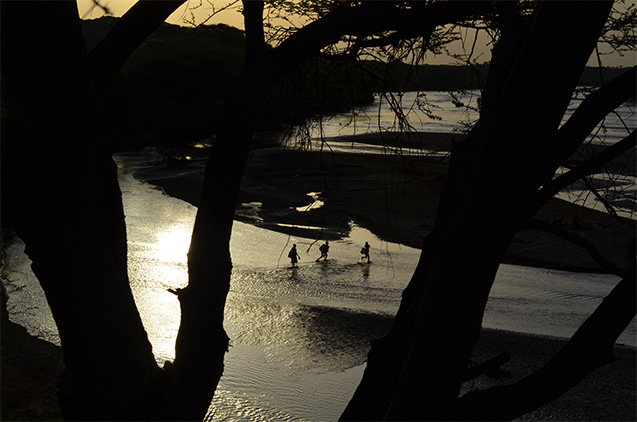 NEW YORK, NEW YORK—Climate change and the appearance of grasslands
coincided with the evolution of the first hominins, according to a study
led by Kevin Uno of Columbia University’s Lamont-Doherty Earth
Observatory. He and his team collected sediment cores dating back 24
million years from the bottom of the Red Sea and the western Indian
Ocean. Analysis of the chemicals in the sediments suggests that plants
that grew in East Africa, where the first hominins are thought to have
evolved, blew out to sea and sank. More than ten million years ago,
those plants came from dense forests. Chemicals linked to grasses slowly
began to appear in later layers of sediment. “This now gives us a
timeline for the development of those grasses, and tells us they were
part of our evolution from the very beginning,” Uno said in a UPI report.
NEW YORK, NEW YORK—Climate change and the appearance of grasslands
coincided with the evolution of the first hominins, according to a study
led by Kevin Uno of Columbia University’s Lamont-Doherty Earth
Observatory. He and his team collected sediment cores dating back 24
million years from the bottom of the Red Sea and the western Indian
Ocean. Analysis of the chemicals in the sediments suggests that plants
that grew in East Africa, where the first hominins are thought to have
evolved, blew out to sea and sank. More than ten million years ago,
those plants came from dense forests. Chemicals linked to grasses slowly
began to appear in later layers of sediment. “This now gives us a
timeline for the development of those grasses, and tells us they were
part of our evolution from the very beginning,” Uno said in a UPI report.Scientists Unearth Macaque “Tools” in Thailand
 OXFORD, ENGLAND—The wild macaques of coastal Thailand have been using stones as tools for generations, according to a UPI
report. Scientists led by Michael Haslam of the University of Oxford
observed the monkeys searching for good stones and using them to process
oysters, snails, nuts, and crabs. When particular stones worked well,
the monkeys placed them near the boulders where they preferred to eat.
The researchers then examined the marks on the stones and excavated the
area to look for similar ones. They found identical marks on stones in a
layer with oyster shells that were carbon-dated to between ten and 50
years ago. “As we build up a fuller picture of their evolutionary
history, we will start to identify the similarities and differences in
human behavior and that of other primates,” Haslam explained.
OXFORD, ENGLAND—The wild macaques of coastal Thailand have been using stones as tools for generations, according to a UPI
report. Scientists led by Michael Haslam of the University of Oxford
observed the monkeys searching for good stones and using them to process
oysters, snails, nuts, and crabs. When particular stones worked well,
the monkeys placed them near the boulders where they preferred to eat.
The researchers then examined the marks on the stones and excavated the
area to look for similar ones. They found identical marks on stones in a
layer with oyster shells that were carbon-dated to between ten and 50
years ago. “As we build up a fuller picture of their evolutionary
history, we will start to identify the similarities and differences in
human behavior and that of other primates,” Haslam explained.Researchers Decipher Antikythera Mechanism Text
 ATHENS, GREECE—Using X-ray scanning equipment and imaging technology, an
international team of scientists has read most of the explanatory text
engraved in tiny letters on the known surviving fragments of the
Antikythera Mechanism. Mike Edmunds of Cardiff University said that the
text does not instruct the reader on the use of the device, but is more
like a descriptive label. The artifact, recovered from a first-century
B.C. shipwreck off the coast of a Greek island in the early years of the
twentieth century, is made up of bronze gears and plates, and was
probably encased in wood and operated with a hand crank. It is thought
to have functioned as an astronomical instrument to track the position
of the sun, the phases of the moon, the positions of the planets, and
the timing of eclipses. “It’s like a textbook of astronomy as it was
understood then, which connected the movements of the sky and the
planets with the lives of the ancient Greeks and their environment,”
Alexander Jones of New York University said in an Associated Press report. Investigators have returned to the shipwreck to look for more pieces of the device.
ATHENS, GREECE—Using X-ray scanning equipment and imaging technology, an
international team of scientists has read most of the explanatory text
engraved in tiny letters on the known surviving fragments of the
Antikythera Mechanism. Mike Edmunds of Cardiff University said that the
text does not instruct the reader on the use of the device, but is more
like a descriptive label. The artifact, recovered from a first-century
B.C. shipwreck off the coast of a Greek island in the early years of the
twentieth century, is made up of bronze gears and plates, and was
probably encased in wood and operated with a hand crank. It is thought
to have functioned as an astronomical instrument to track the position
of the sun, the phases of the moon, the positions of the planets, and
the timing of eclipses. “It’s like a textbook of astronomy as it was
understood then, which connected the movements of the sky and the
planets with the lives of the ancient Greeks and their environment,”
Alexander Jones of New York University said in an Associated Press report. Investigators have returned to the shipwreck to look for more pieces of the device.
Subscribe to:
Posts (Atom)