Showing posts with label RESEARCH WORK. Show all posts

Thursday, 2 June 2016

Meet Our newest Ancestors Homo Naledi

                                                    Homo Naledi
Domain : Eukarya
Kingdom : Animalia
Phylum : Chordata
Subphylum : Vertebrata
Class : Mammalia
Order : Primates
Family : Hominidae
Sub Family : Homininae
Tribe : Hominini
Subtribe : Hominina
Genus : Homo
Species : Homo Naledi

A team of Paleoanthropologists under Lee Berger went into the Rising Star Cave in Gauteng Province in South Africa in 2013 and till 2016 fossils were found there and these fossils have been proposed to represent he extinct species of the hominin Homo Naledi.


 The Rising Star Cave


The excavation team consisted six paleoanthropologists who were all female and could pass through an openeing only seven inches ( 18 cm ) wide to acess the Dinaledi chamber. Those chosen were Hannah Morris , Marina Elliot , Becca Peixotto , Alia Gurtov , Lindsay Eaves and Ellen Feuerriegel.
They have since been named the Underground Astronauts .
More than 1200 fossils were found in the Dinaledi Chamber and catalouged in November 2013 representing atleast a dozen individuals . Only 20 out of 206 bones of the human body were not found in the chamber.

As of September 2015 fossils of atleast 15 individuals , amounting to 1550 specimens , had been excavated from the cave. About 300 bone fragments were found from the surface of the Dinaledi  Chamber  and about 1250 fossil specimens  were recovered from the chamber's excavation pit . The fossils include skull ,jaws , ribs , teeth , bones of an almost complete foot , of a hand and of an inner ear. The bones of old , young and infant individuals were found .


ARTISTS IMPRESSION OF THE HOMO NALEDI


Anthropologist John D Hawkes from the University of Wisconsin Madinson who was a member of the team stated that the scientific facts are that all bones recovered are hominid except for those of an owl. There is no sign of predation and and there is no predator that  accumulates  only hominids this way and the bones were not accumulated here all at once . There is no evidence of rocks falling into the cave along with the  bones or the bones having been flown here along with water . Lee Berger and his team have suggested that the best hypothesis that these individuals were capable of ritualistic behaviour . They speculate that the placing of dead bodies in the cave was a ritualistic behaviour , a sign of symbolic thought which implies that they had intelligence and were similar to human species


The homo naledi fossils are the largest collection of fossils found of a single species of hominin in Africa and provides information about the early evolution of humans.


Picture Right - Skeletons Discovered
Wednesday, 18 May 2016

Ancestral Pueblo Carved Paths Through Lava Fields

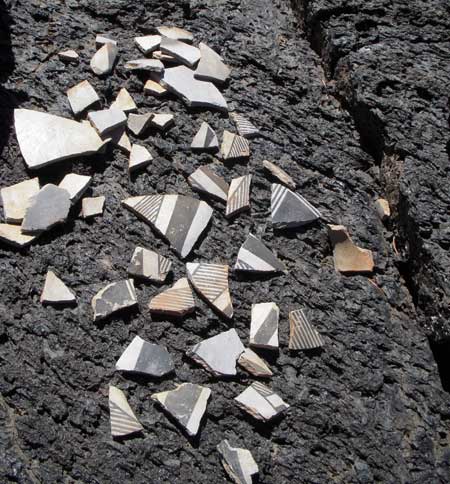
New Mexico Lava TrailsArchaeologists have explored an Ancestral Pueblo village in northwest New Mexico that dates to 900 years ago and was built amid lava fields. Surrounding the Village, called Las Ventanas, they  found a detailed array of trails, whose purpose is unclear. The trails totaled 62 miles in all and some had no apparent destination other than the lava itself.  What this means is the trails were built, primarily, as ritual features themselves, to access different points in the lava. Goods including ceramics and stone tools were also found along many of the paths, adding further evidence that they had a ceremonial purpose.The people who lived at Las Ventanas used the local black volcanic rock in their buildings, along with sandstone, which was traditionally used by Pueblo to the the north at Chaco Canyon. The village comprises more than 100 separate sites including a two-stored great house with up to 85 rooms that is estimated to have been built between 1075 to 1125.

Archaeologists Revisit Early Habitation Site in Florida

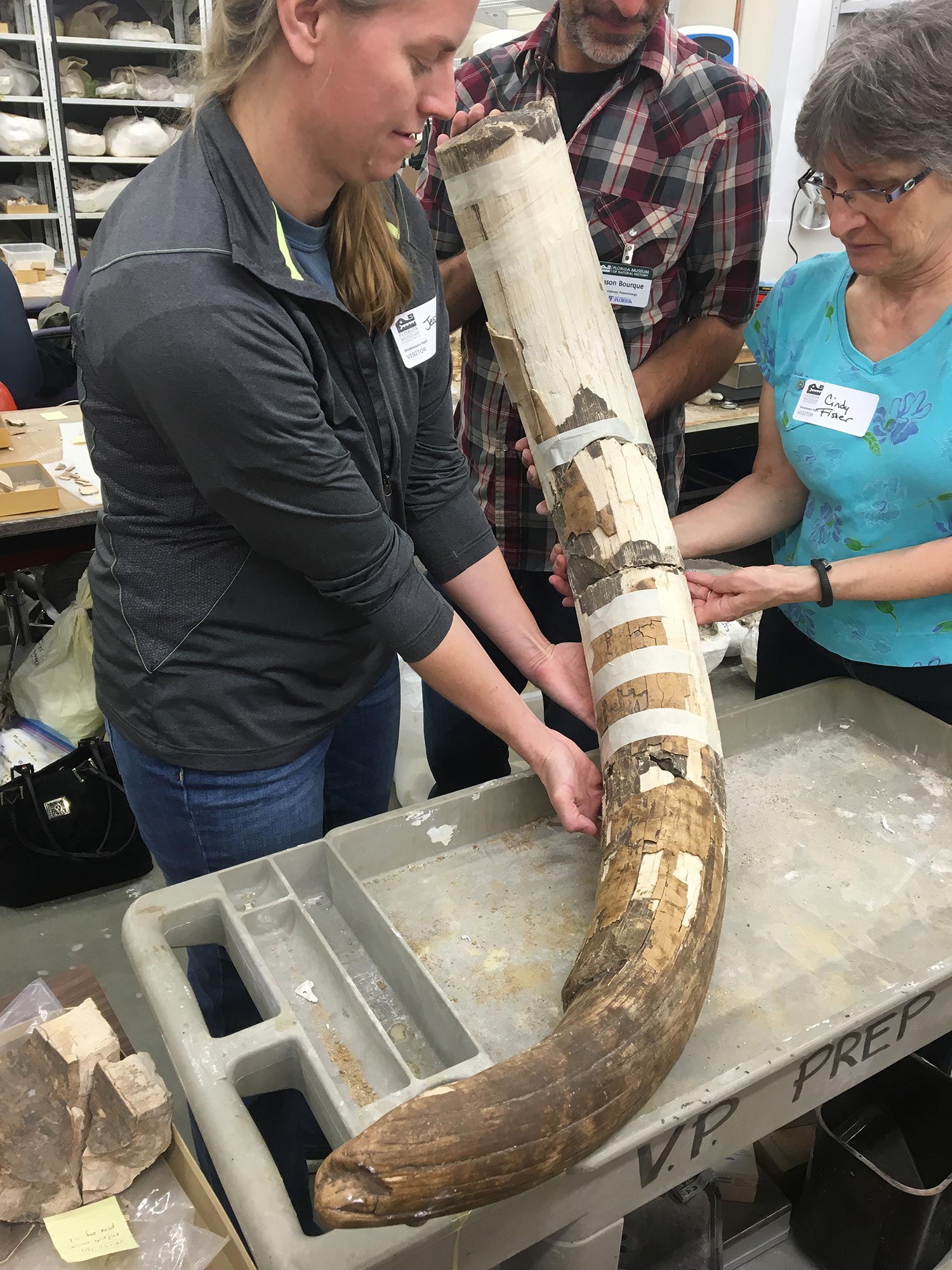
Florida Page LadsonEvidence suggesting that humans lived in northwestern Florida more than 14,000 years ago has been re-examined by an international team of scientists, who also conducted an additional excavation. In 1983, stone artifacts and butchered mastodon remains were discovered at the Page-Ladson site, which is thought to have been a watering hole that is now located under 13 feet of sediment at the bottom of the Aucilla River. The sediments were dated to 14,400 years ago, but at the time, critics argued that the artifacts could have been carried to the site and deposited in the ancient sediments by river currents. The new excavation returned to the murky waters of the site and recovered more stone tools and the bones of extinct animals. The new information also suggest that humans and mega-fauna coexisted for at least 2,000 years.

Stones may Mark Site of 18th-Century British Fort

Canada Fort Excavation

According to CBC CANADA reports that researchers from Saint Mary's University uncovered traces of what could be an eighteenth-century British fort at the site of the Lunenburg Academy. The professors and adult student first conducted a geophysical survey of the area where historical records place the fort in 1753. The subsequent excavation uncovered two rows of stone that may have been knocked down after the Seven Years War to make way for residential expansion.

Archaeologists Examine The Curtain Theater in London

According to a report published in the Guardian reports that archaeologists from the Museum of London Archaeology have excavated the well-preserved remains of The Curtain, a sixteenth-century theater where Shakespeare performed as an actor. They found a rectangular building that could have held about 1,000 people and segments of wall standing about five feet tall. Scholars think that Shakespeare may have staged the first performances of Romeo and Juliet and Henry V at the Curtain which was assumed to have a circular shape, since the prologue of Henry V mentions a wooden O. 

London Shakespeare The Curtain

Artifacts from the site include a lead token, a broken bone comb, a mental mount for a cloth purse and a piece of green pottery thought to be the base of a bird call, perhaps used for stage effects. Bowsher now thinks that the Henry V prologue mentioning the wooden O may have been added later, when the play was performed at The Globe.

Lead Levels Reveal History of Water System in Naples

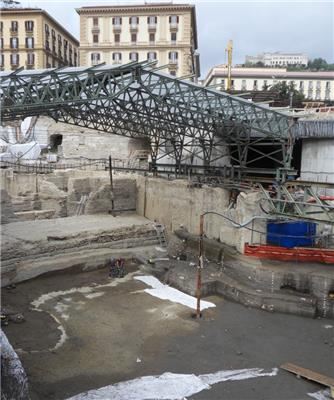
Italy Naples harborAn international team from CNRS, the University of Glasgow, the University of Southampton and the University of Naples Federico II, tested core samples from a nearly 20-foot deep deposit of sediments in the ancient port of Naples to study the effect of the eruption of Mount Vesuvius in A.D. 79 on the Aqua Augusta aqueduct and water system. According to a report, which accumulated in the harbor after passing through the water circulation system in Naples and neighboring to towns. The geochemical analysis detected two different lead isotopes, one before and one after the eruption of the volcano. The team says this indicates the system was destroyed by the eru[topm and that the Romans replaced it over a period of about 15 years with lead from one or more different mines. The study also suggests that the water system had been expanding until about the beginning of fifth century, when the sediments in the harbor became less contaminated. This shrinking of the water system may have been caused by damage from invasions, new eruptions of Mount Vesuvius or epidemics.

5000 Year Old Kurgan Excavated in Turkey

Turkey kurgan tomb

According to the excavation report from the Istanbul Archaeology Museum, archaeologist have excavated the first and oldest 5000 year old kurgan style tomb that has been discovered and completely unearthed in Turkey. The circular mound sat over an intact burial in the Silivri district of Istanbul. Evidence at the site suggests treasure hunters had attempted to dig it up several times, but had not been able to reach the main burial chamber, where researchers found the remains of a Bronze Age soldier or warrior who had been buried with a spear and two pots.

New Thought on Europe's Ancient Music

The horns played in southern India today are almost identical to those from Iron-Age Europe. A research suggests that the ancient horns were often used as rhythm instruments, not for melody or harmony as modern Westerns might expect. Almost identical instruments that have been unearthed together may be out of tune with each other, but the dissonance may have been intentional.

Europe India music

Thursday, 12 May 2016

The Genetic History of Ice Age Europe

Analyses of ancient DNA from prehistoric humans paint a picture of dramatic population change in Europe from 45,000 to 7,000 years ago, according to a new study. The new genetic data reveal two big changes in prehistoric human populations that are closely linked to the end of the last Ice Age around 19,000 years ago.
Archeological studies have shown that modern humans swept into Europe about 45,000 years ago and caused the demise of the Neanderthals, indicated by the disappearance of Neanderthal tools in the archaeological record. The researchers also knew that during the Ice age - a long period of time that ended about 12,000 years ago, with its peak intensity between 25,000 and 19,000 years ago - glaciers covered Scandinavia and northern Europe all the way to northern France. As the ice sheets retreated beginning 19,000 years ago, prehistoric spread back into northern Europe.


But prior to this study, there were only four samples of prehistoric European modern humans 45,000 to 7000 years old for which genomic data were available, which made it all but impossible to understand how human populations migrated or evolved during this period. 
The genetic data show that, beginning 37,000 years ago, all Europeans come from a single founding population has some deep branches in different parts of Europe, one of which is represented by a specimen from Belgium. This branch seems to have been displaced in most parts of Europe 33,000 years ago, but around 19,000 years ago a population related to it re-expanded across Europe. Based on the earliest sample in which this ancestry is observed, it is plausible that this population expanded from the southwest, present-day Spain, after the Ice Age peaked.
The Study was an equal collaboration of David Reich's laboratory with the laboratories of Savante Paabo and Johannes Krause, which worked together to extract and analyze the DNA from these ancient bones. Ancient specimens are frequently contaminated with m-DNA, as well DNA from archaelogists or lab technicians who have have handled the specimens.

Tuesday, 10 May 2016

Obama Signs into Law New Restrictions on Syrian Antiquities

The united states on Monday stepped up efforts to stop the Islamic State's trade in looted antiquities as President Barrack Obama signed into law new import restrictions on Syrian cultural artifacts. The bill passed the House and Senate last month. Its proponents argue that Islamic State and other militants have made millions of dollars selling irreplaceable artifacts on the black market, with buyers in America part of the market for the stolen goods. The profits have helped fund violence.
The new law prevents archaeological or ethnological material removed from Syria from being imported into the United States or sold in the country. Possible exceptions apply, such as when rightful owners want to temporarily relocate cultural property to the U.S. for protection.

Monday, 9 May 2016

Picture Tattoos Spotted on Egyptian Mummy

Most tattoos found on Egyptian mummies are patterns of dots or dashes but according to a report that published in Nature, tattoos representing actual objects on a 3000 year old mummified woman from Deir el Medina, the village where the artisans who worked on tombs in the Valley of Kings are thought to have lived. Using infrared lighting and an infrared sensor.
Newly reported tattoos are the first on a mummy from dynastic Egypt to show actual objects, among them lotus blossoms on the mummy's hips. cows on her arm and baboons on her neck. Just a few other ancient Egyptian mummies sport tattoos, and those are merely patterns of dots or dashes.
Especially prominent among the new tattoos are so-called wadjet eyes: possible symbols of protection against evil that adorn the mummy's neck. Shoulders and back.

Sunday, 8 May 2016

800 years old Brick-Lined Well Discovered in Viernam

Archaeologists have discovered a well thought to date to the twelfth century at a site known for its Chamsteles, statues and temples. According to a report in Vietnam News, the square-shaped well measures approximately three feet per side and is lined with bricks similar to those used in other Cham structures in central Vietnam. The well is located on the edge of the archaeological site, near an agricultural field, so a fence will be built to protect it.

Friday, 6 May 2016

Dinosaurs Left Europe??

Researchers have used network theory to visually depict the movement of dinosaurs around the world during the Mesozoic Era -- including a curious exodus from Europe.
According to a research published in the Journal of Biogeography, dinosaurs continued to migrate to all parts of the world after the supercontinent Pangaea split into land masses that are separated by oceans.
In the study, the researchers used the Paleobiology Database that contains every documented and accessible dinosaur fossil from around the world. Fossil records for the same dinosaur families from different continents were then cross-mapped for different periods of time, revealing connections that show how they have migrated.


Some regions of the world, such as Europe, have extensive fossil records from a long history of palaeontology digs, while other parts of the world have been largely unexplored. To help account for this disparity in fossil records, which could otherwise skew the finding, the researchers applied a fliter to the database records to only count the first time that a dinosaur family connection occurred between two continents. The findings support the idea that, although continental splitting undoubtedly reduced intercontinental migration of dinosaurs, it did not completely inhibit it.
Suprisingly, the research also showed that all connections between Europe and other continents durinf the Early Cretaceous (125 - 100 million) were out-going. That is while dinosaurs families were leaving Europe, no new families  were migrated  into Europe.

While Network theory is commonly used in computer science for quantifying internet data, such as friend connection in the social media. It has only recently been applied to biology research and this is the first study it to on dinosaurs research.

Scientists Explain the Evolution of Large Dinosaur

Scientists have developed computer models of the bodies of sauropod dinosaurs to examine the evolution of their body shape. Scientists of the University of Liverpool have developed computer models of the bodies of sauropod dinosaurs to examine the evolution of their body shape.
Sauropod dinosaurs include the largest land animals to have ever lived. Some of the more well-known sauropods include Diplodocus, Apatosaurus and Brontosaurus. They are renowned for their extremely long necks, long tails as well as four thick, pillar-like legs and small heads in relation to their body.
To date, however, there have been only limited attempts to examine how this unique body-plan evolved and how it might be related to their gigantic body size. Dr. Karl Bates from Department of Musculoskeletal Biology and his colleagues used three-dimensional computer models reconstructing the bodies of sauropod dinosaurs to analyze how their size, shape and weight-distribution evolved over time.


Source: Science Daily

A Black Hole 660 million Times as Massive as Our Sun

A super massive black hole sits at the center of the galaxy NGC 1332, which is 73 million light years from the Earth. According to the research study it's about 660 million times as massive as our sun, and a cloud of gas circles it at about 1.1 mph.
Normally black holes are found at the centers of the galaxies and are so dense that their gravity pulls anything that is close enough, including light. A black hole can form after matter, often from an exploding star, condenses via gravity. Super massive black holes at the centers of galaxies grow by swallowing gas, stars and other black holes. But just because there is a black hole in your neighborhood, it does not act like a cosmic vacuum cleaner. Stars can come close to a black hole, but as long as they're in stable orbits and moving fast enough, they won't enter the black hole.The black hole at the center of the Milky Way is the biggest black hole of our own galaxy. But we are not going to stuck in it.


Scientists think every massive galaxy has a massive black hole at its center. The ubiquity of black holes is one indicator of the profound influence that they have on the formation of the galaxies in which they live.
Understanding the formation and evolution of galaxies is one of the major challenges for modern astrophysics. The scientists' findings have important implications for how galaxies and their central super massive black holes form. The ratio of a black hole's mass to a galaxy's mass is important in understanding their makeup. Research suggests that the growth of galaxies and the growth of their black holes are coordinated. And if we want to understand how galaxies form and evolve, we need to understand super massive black holes.
Part of understanding super massive black holes is measuring their exact masses. The lets scientists determine if a black hole is growing faster or slower than its galaxy. If black hole mass measurements are inaccurate, scientists can't draw any definitive conclusion.
To measure NGC 1332's central black hole, scientists tapped ALMA's high resolution observations of carbon monoxide emissions from a giant disc of cold gas orbiting the hole. They also measured the speed of the gas.
Black hole has been a very active area of research for the last 20 years for the astrophysicists. many research comes out these days about black holes. Lets see what we found about the black holes in the near future.

Source: Astrophysical Journal

Tuesday, 3 May 2016

Endangered Venomous Mammal Predates Dinosaurs' Extinction

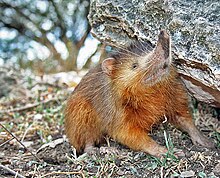
According to a study published in Mitochondrial DNA, confirmed that the venomous mammal solenodon diverged from all other living mammals 78 million years ago, long before an asteroid wiped out the dinosaurs.
An offspring's nuclear DNA is a mixture of genes from each parent while mitochondrial DNA is passed directly from mother to offspring without changes, creating a genetic record that researchers can use to trace back the lineage of organisms.

Hispaniolan Solenodon crop.jpg

Because solendons are endangered, it is difficult to acquire DNA. Working with colleagues at several universities in the Dominican Republic, UPR Professor of Generics Taras Oleksyk and his team collected samples by laying on the ground and waiting for the solenodons to crawl across their bodies.
A previous study used a different set of genes to estimate that solenodons diverged from mammals during the Cretaceous Period 76 million years ago. Working with an expert at Texas A&M, this study used a very different method but still established a similar estimate: 78 million years.
Interestingly, these two estimates align with a hypothesis regarding how the solenodon came to inhabit the island of Hispaniola. Some geologists speculate that the island was part of a volcanic arc connected to Mexico 75 million years ago and over time the arc has moved eastward.

Monday, 25 April 2016

Newly Discovered Dinosaur Reveals How T.Rex Became King of the Cretaceous


The fossilized remains of a new horse-sized dinosaur reveal how Tyrannosaurus Rex and its close relatives became top predators, according to a new study published in the Proceedings of the National Academy of Sciences. 
Paleontologists have long known from the fossil record that the family of dinosaurs at the center of the study - tyrannosaurs - transitioned from small bodied species to fearsome giants like the T. rex over the course of 70 million years. But now newly discovered dinosaur fossils suggest that much of this transition and growth in size occurred suddenly, toward the end of this 70 million year period. The study also shows that before the evolution of their massive size, tyrannosaurs had developed keen senses and cognitive abilities, including the ability to hear low-frequency sounds. This positioned them to take advantage of opportunities to reach the top of their food chain in the Late Cretaceous Period after other groups of large meat-eating dinosaurs had gone extinct about 80 -90 million years ago.
Until now, little was known about how tyrannosaurs became the giant, intelligent predator that dominated the landscape about 70 to 80 million years ago. The newly discovered species, named Timurlengia euotica, lived about 90 million years ago and fills a 20 million year gap in the fossil record of tyrannosaurs. The new species is a tyrannosaur but not the ancestor of the T.rex. 
The species' skull was much smaller than  smaller than that of T.rex. However, key features of Timurlengia's skull reveal that its brian and senses were already highly developed. Timurlengia was about the size of a horse and could weigh uo to 600 pounds. It had long legs and was likely a fast runner. 
The first tyrannosaurs lived during the Jurassic Period, around 170 million yeras ago, and were only slightly larger than a human. However, by the Late Cretaceous Period - around 100 million years later -tyrannosaurs had evolved into animals like T. rex which could weigh up to 7 tons.
The new species' small size some 80 million  years after tyrannosaurs first appeared in the fossil record indicates that its huge size developed only toward the end of the group's long evolutionary history.
The new study was funded by the European Commision The fieldwork was supported by the Natioanal Science Foundation and the National Geographic Society. The work was carried out in collaboration with researcheers at the University of Edinburgh, Russian Academy of Sciences and Saint Petersburg State University.

First North American Monkey fossils are Found in Panama Canal excavation


Seven fossil teeth exposed by the Panama Canal expansion project are the first evidence of a monkey on the North American continent before the Isthmus of Panama connected it to South America 3.5 million years ago. A team including Carlos Jaramillo, staff scientist at the Smithsonian Tropical Research Institute (STRI), published this discovery online in the journal,Nature. They named the new monkey species Panamacebus transitus in honor of Panama and the monkey's movement across the ancient seaway that divided North and South America.
Before the monkey teeth were discovered, the evidence of movement of a mammals from South America are 8.5 - 9 million-year-old fossil remains of giant sloths. The authors of this report suggest two explanations: 
  1. That mammal from South America were more adapted to life in the South American derived forests still found in Panama and Costa Rica than to other forest types characteristic of Northern Central America
  2. That the lack of exposed fossils deposits throughout Central America means that evidence of these dispersals has yet to be revealed.

Evolution of Giant Bears in the Americas

During the Pleistocene giant bears weighing over 1000 kg roamed both North and South America. These giants belonged to a now practically extinct subfamily of bears - Tremarctinae - which is today only represeeinted by the small, herbivorous Andean spectacled bear (Tremarctos omatus).
The giant North American bears (Arctodus) and South American bears (Arctotherium) have long been believed to be each others' closest relative. However, by comparing ancient DNA data obtained from representatives of the two extinct genera and comparing them with the living species, the scientists were able to show that Arctotherium is most closely related to Tremarctos and not Arctodus. 
This convergent evolution would have arisen in response to similar environmental conditions on both continents, most like it an abundance of large herbivore carcasses(killed by smaller predators), which Arctodus and Arctotherium could effectively dominate, and a lack of competing scavengers.

Mammoths Meted Beyond Species Boundaries

A new study suggested that different species of mammoths meted in North America. A new research study on the DNA structure of the mammoth genome suggests that they meted beyond their species boundaries. Several species of mammoth are thought to have roamed across the North American physical appearance to deal with different environments, it did not prohibit them from cross-breeding and producing healthy offspring.
A species can be defined as a group of similar animals that can successfully breed and produce fertile offspring. By using differences in the size and shape of their fossilized teeth, a number of North American mammoth species have been identified. But some scientists are not confident this method of species categorization tells the whole story.


North American mammoths such as the Colombian mammoth and the Wooly Mammoths were historically thought to originate from two separate primitive species. However, the latest DNA analysis agrees with a more recent idea that all North American mammoths originated from a single primitive species, the Steppe Mammoth. So, while mammoths clearly method of differences in their physical appearance to deal with different environments, it did not prohibit them from cross-breeding and producing healthy offspring. 
Despite this apparent adaptability, which should surely be a recipe for success, mammoths disappeared from the face of Earth 10,000 years ago. 
As well as challenging the classic method of defining a species, scientists believe the findings of this study are just the start of understanding mammoth evolutionary history. Techniques to extract and analyses ancient DNA have undergone a tremendous improvement in recent years and as these technologies continue to improve we can expect further breakthroughs.