Showing posts with label EXTINCTION. Show all posts

Friday, 24 June 2016

Mystery 'extinct' space rock found in Sweden

A morsel of never-before-seen alien rock has been dug up in a limestone quarry in Sweden, where it had lain deeply buried for about 470 million years, scientists have said.
The biscuit-sized remains are unlike any other meteorite found on Earth to date, and may shed light on the history and formation of our Solar System, they reported in the journal Nature Communications.
Mystery 'extinct' space rock found in Sweden Dubbed Öst 65, it is thought to be a splinter of a potato-shaped rock some 20-30 kilometres (12-19 miles) wide, which had smashed into another much larger body, sprinkling our adolescent planet with debris.
Previously, remnants of only one of the two rocks had been found, in the form of meteorites called chondrites.
But now scientists believe they have unearthed a piece of the second space orb, boosting the theory of a major smash-up between two galactic travellers.
It is thought that the breakup of the bigger chondrite body, about 100-150km across, had yielded a major cluster of rocky debris in the asteroid belt between Mars and Jupiter.
The resultant flux of extraterrestrial material, some of which rained down on Earth, coincided with a massive expansion of invertebrate ocean life at a time our planet's landmass was largely fused together into a supercontinent called Gondwana.
"The single meteorite that we now found... is of a type that we do not know of from today's world," study co-author Birger Schmitz of Lund University in Sweden told AFP.
Along with about 100 chondrite pieces discovered to date, the new alien fragment had sunk to the floor of an ocean covering parts of what today is a limestone quarry in southern Sweden.

'Extinct' space rock? 
"The object contains very high concentrations (compared to Earth materials), of elements such as iridium, which is very rare on Earth," Schmitz explained by email.
"The meteorite also contains high concentrations of rare isotopes of the element Neon" -- and in different proportions than in chondrites.
The team measured telltale signs of cosmic radiation in the meteorite to determine how long it had flown around in space before crashing to Earth.
"Our meteorite fell 470 million years ago," said Schmitz -- more or less the same period as the chondrite fragments.
The mysterious morsel "may be a fragment of the impactor that broke up the (chondrite) parent body," concluded the study.
The extraterrestrial lander may be the first documented example of an "extinct meteorite" -- so called because it's parent body had been entirely consumed by space collisions, meaning no more fragments can fall to Earth today.
Chondrites still drop to our planet every now and then.
The findings mean that today's meteorites -- on which scientists base much of their assumptions about our Solar System's formation -- are not fully representative of what is, and once was, out there.
"Apparently, there is potential to reconstruct important aspects of solar-system history by looking down on Earth sediments, in addition to looking up at the skies," wrote the study authors.

Taken from The Local


Thursday, 2 June 2016

Meet Our newest Ancestors Homo Naledi

                                                    Homo Naledi
Domain : Eukarya
Kingdom : Animalia
Phylum : Chordata
Subphylum : Vertebrata
Class : Mammalia
Order : Primates
Family : Hominidae
Sub Family : Homininae
Tribe : Hominini
Subtribe : Hominina
Genus : Homo
Species : Homo Naledi

A team of Paleoanthropologists under Lee Berger went into the Rising Star Cave in Gauteng Province in South Africa in 2013 and till 2016 fossils were found there and these fossils have been proposed to represent he extinct species of the hominin Homo Naledi.


 The Rising Star Cave


The excavation team consisted six paleoanthropologists who were all female and could pass through an openeing only seven inches ( 18 cm ) wide to acess the Dinaledi chamber. Those chosen were Hannah Morris , Marina Elliot , Becca Peixotto , Alia Gurtov , Lindsay Eaves and Ellen Feuerriegel.
They have since been named the Underground Astronauts .
More than 1200 fossils were found in the Dinaledi Chamber and catalouged in November 2013 representing atleast a dozen individuals . Only 20 out of 206 bones of the human body were not found in the chamber.

As of September 2015 fossils of atleast 15 individuals , amounting to 1550 specimens , had been excavated from the cave. About 300 bone fragments were found from the surface of the Dinaledi  Chamber  and about 1250 fossil specimens  were recovered from the chamber's excavation pit . The fossils include skull ,jaws , ribs , teeth , bones of an almost complete foot , of a hand and of an inner ear. The bones of old , young and infant individuals were found .


ARTISTS IMPRESSION OF THE HOMO NALEDI


Anthropologist John D Hawkes from the University of Wisconsin Madinson who was a member of the team stated that the scientific facts are that all bones recovered are hominid except for those of an owl. There is no sign of predation and and there is no predator that  accumulates  only hominids this way and the bones were not accumulated here all at once . There is no evidence of rocks falling into the cave along with the  bones or the bones having been flown here along with water . Lee Berger and his team have suggested that the best hypothesis that these individuals were capable of ritualistic behaviour . They speculate that the placing of dead bodies in the cave was a ritualistic behaviour , a sign of symbolic thought which implies that they had intelligence and were similar to human species


The homo naledi fossils are the largest collection of fossils found of a single species of hominin in Africa and provides information about the early evolution of humans.


Picture Right - Skeletons Discovered

Tuesday, 3 May 2016

Endangered Venomous Mammal Predates Dinosaurs' Extinction

According to a study published in Mitochondrial DNA, confirmed that the venomous mammal solenodon diverged from all other living mammals 78 million years ago, long before an asteroid wiped out the dinosaurs.
An offspring's nuclear DNA is a mixture of genes from each parent while mitochondrial DNA is passed directly from mother to offspring without changes, creating a genetic record that researchers can use to trace back the lineage of organisms.

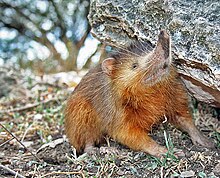
Hispaniolan Solenodon crop.jpg

Because solendons are endangered, it is difficult to acquire DNA. Working with colleagues at several universities in the Dominican Republic, UPR Professor of Generics Taras Oleksyk and his team collected samples by laying on the ground and waiting for the solenodons to crawl across their bodies.
A previous study used a different set of genes to estimate that solenodons diverged from mammals during the Cretaceous Period 76 million years ago. Working with an expert at Texas A&M, this study used a very different method but still established a similar estimate: 78 million years.
Interestingly, these two estimates align with a hypothesis regarding how the solenodon came to inhabit the island of Hispaniola. Some geologists speculate that the island was part of a volcanic arc connected to Mexico 75 million years ago and over time the arc has moved eastward.

Wednesday, 19 August 2015

We are Responsible for the Extinction of the Mega Fauna

Scientists claimed their research settles a prolonged debate over mankind or  climate change was the dominate cause of the demise of massive creatures in the time of the saber-tooth, the woolly mammoth, the Woolly Rhinos and the giant armadillo.

Woolly Mammoth
Early human were the dominate cause of the extinction of a variety of species of giant beasts. 

Source: University of Exeter 

Monday, 1 June 2015

Critically endangered gibbon: New action plan to save world's rarest primate

An international team of more than 100 scientists, policy makers and community representatives have published a new report outlining the vital steps needed to save the Hainan gibbon (Nomascus hainanus) from extinction. With only 25 individuals remaining in less than 20 square kilometers of forest in China's Hainan Island, the Critically Endangered Hainan gibbon is one of the rarest animals in the world. 

The last surviving Hainan gibbon population contains only three social groups, in which male and female gibbons still sing duets with each other at dawn. This species faces a high risk of extinction due to its isolation and tiny population size -- it could potentially become the first ape species to be wiped out by human activity. Experts hope the comprehensive report will galvanise and encourage authorities and communities to take immediate and effective action.
Dr Samuel Turvey, Senior Research Fellow at ZSL, who co-chaired the major international conservation planning meeting in Hainan that produced the report, said: "Ensuring a future for the Hainan gibbon is one of the most important global priorities in mammal conservation. If the right steps are carried out now, it's not too late to save this incredible species. I hope that the Hainan gibbon will be used in the future as an example of a conservation success story."
The report identified over 40 key actions needed to boost gibbon numbers and ensure their long-term survival, including enhancing monitoring systems to keep track of remaining individuals, creating canopy bridges between forest fragments to expand their habitat range, and limiting disturbance by people in forested areas.
Professor Long Yongcheng, head of the IUCN's China Primate Specialist Group, said: "The Hainan gibbon is an indicator of good forest health and ecological stability, and so protecting the species also helps to conserve Hainan's environment and its international green image."
There were more than 2,000 Hainan gibbons in the 1950s. During the late 20th century their numbers were devastated by hunting and the loss of their forest habitat for logging and rubber plantations. Only about 30 gibbons remained in the 1980s. While both the gibbons and their habitat are now protected under Chinese law, they are still potentially threatened by human disturbance, and by a lack of connected forest habitat to allow expansion of their population. A typhoon or disease outbreak also has the potential to wipe out the entire tiny population.


This story is taken from Science Daily

Saturday, 30 May 2015

How seabirds are affected by climate change

Collaboration between ecologists and climate researchers has generated fascinating new insight into how seabirds are affected by climate change. 


Until recently, ecologists used a specific set of methods to study the relationship between animals and climate change, one of which is the NAO index (North Atlantic Oscillation), which measures differences in air pressure between Portugal and Iceland.
If no correlation was found here, some ecologists refuted that climate change is causing the observed changes.
Dark figures
"This is a gross oversimplification. You could even say that until now we have not been able to see the trees for the forest. Now we are trying to see each individual tree as well. Many changes caused by climate change will never be detected using only the NAO Index. We are revolutionising the research on the connection between animals and climate change," says researcher Michel d. S. Mesquita at Uni Research Climate and the Bjerknes Centre.
Mesquita has started collaborating with ecologists at the High North Research Centre for Climate and the Environment (the Fram Centre), the Norwegian Institute for Nature Research (NINA), the Norwegian University of Science and Technology (NTNU) and climatologists at the University of Reading in the UK and the Max Planck Institute for Meteorology in Hamburg. Together they have used traditional methods from climate research to study how animals are affected by changes in the climate. This has not been done before.
Virtually extinct
Researchers have studied the distribution of the common guillemot, a seabird similar to penguins. The common guillemot is an endangered species in Norway and is on the Norwegian Red List. In the 1960s there were around 160,000 pairs in Norway; today there are only 15,000 breeding pairs left.
Senior Researcher Kjell Einar Erikstad has studied the common guillemot population closely. There are therefore good coherent data on this population. In winter 1986-87 something strange happened to the common guillemot population. An unusually large number of birds were found starving and dead in the sea. Researchers looked into this incident to try to determine if it could be linked to climate change.
"We found out that that winter there was an unusually high number of high pressure systems over the Barents Sea combined with polar lows. We found this out using traditional methods from climate research, such as point maps," says Mesquita.
Point maps are maps where the same climatic data are measured at a number of different geographical points for comparison with changes in animal populations. This is the method used by Jacob Bjerknes in 1969 to explain El Niño. El Niño is a global phenomenon that arises in the ocean and in the atmosphere, leading to large temperature fluctuations in the surface water of the Pacific Ocean.
Less upwelling
One of the consequences of the high pressure was that there was less upwelling of the water in the ocean. This meant that food and nutrients remained on the seabed and were therefore not available for fish. Fish stocks declined, which in turn affected the seabirds.
The extreme high pressure over the Barents Sea also led to a decrease in the air temperature. Guillemots are sensitive to temperature and cannot survive if it is too cold for any length of time.
"The findings we have made here may be relevant to climate change in the future, resulting in more or fewer birds. This is part of the research we are working on going forwards. We observe that climate change can lead to a decline in animal populations," says Mesquita.
The common guillemot spends the whole winter out in the Barents Sea and is therefore particularly vulnerable to the conditions there during the winter months. The birds dive to find food, and can dive down to depths of up to 150 metres. Using dive logs that record the pressure the birds are exposed to, we now know that the birds dive down to 150 metres in the winter and some 7-8 metres in the summer. The common guillemot only goes ashore to nest.
"Using these traditional methods and not only the NAO Index gives us a better understanding of what is happening to the seabirds. We can also use these methods to find out how other species are affected by climate change," says Mesquita.
Looking ahead
"A challenge for the coming years is to use these kinds of climate models to be able to make predictions about populations and ecosystems in the future. This collaboration has already given us several new projects at the Fram Centre in Tromsø, and we are currently preparing projects for the Research Council of Norway," says Kjell Einar Erikstad, Senior Researcher at NINA.
This story is taken from Science Daily

Unmanned aerial vehicle used to study gray whales from above

Scientists are using an unmanned aerial vehicle to take very precise overhead images of migrating gray whale mothers and calves. This research will help scientists understand how environmental conditions control the reproductive success of individual whales and ultimately of the population. 


NOAA Fisheries scientists have stood at this point of land each year for the past 22 years, binoculars in hand, to estimate the number of gray whale calves born each year. That's an important step in monitoring the ups and downs of the population. But scientists would like to understand more completely what causes those ups and downs, and this year, with the addition of the hexacopter, they hope to find out.
As the hubcap-sized hexacopter hovered high above the whales it shot straight-down photos from a digital camera mounted in its belly. In addition to a camera, the hexacopter also carried a very precise pressure altimeter, allowing scientists to know the exact altitude at which each image was taken. Later in the lab, they would analyze the images, measuring the length and girth of the whales to within a few centimeters.
"We can't put a gray whale on a scale, but we can use aerial images to analyze their body condition--basically, how fat or skinny they are," Durban said.
Durban and co-pilot Holly Fearnbach, also a NOAA Fisheries scientist, would ultimately capture images of more than 60 cow/calf pairs.
A Long and Difficult Journey
The amount of fat on a gray whale cow is critical to the survival of her calf. Gray whales don't feed during most of their months-long migration, and while the mothers are fasting, they're also nursing their fast-growing calves. Therefore they need a lot of blubber to fuel the journey to their Arctic feeding grounds.
How much blubber they're carrying depends in part on conditions in the Arctic the summer before. If the whales had access to plentiful prey, the cows will have sufficient fat on them, and most calves will likely survive the journey. But if conditions weren't favorable, fewer calves will be born, and fewer still will make it.
"By studying the body condition of females, we hope to connect the dots between conditions in the Arctic one year and calf production the next," Durban said. "Ultimately, we're trying to understand how environmental conditions affect the reproductive success of the population."
Throughout the study, scientists kept the hexacopter at least 120 feet above the whales. When used at this altitude by trained scientists, unmanned aerial vehicles offer a safe and non-invasive way to collect important data on marine mammals and other protected species.
A Recovery Success Story
Gray whales were hunted nearly to extinction during the whaling days. Thanks to legal protections, the U.S. population of gray whales recovered and was taken off the endangered species list in 1994 (though a second population of gray whales on the Russian side of the Pacific remains endangered).
This success presents scientists with a unique opportunity to study the ecology of large whales, including how environmental conditions put an upper limit on population growth. Because most other large whales are still threatened or endangered, scientists have had few opportunities to observe these dynamics in action.
"With gray whales, we're just beginning to understand what a recovered population of large whales looks like," Durban said.
This understanding will help scientists set recovery goals for other species. And once a species is recovered, it will help scientists distinguish between normal ups and downs in a population and signs of--should it happen--a more serious decline.
"We'll have to get used to seeing recovered populations have good years and bad years," Durban said. "That's what happens when you've recovered and you're hovering around a food ceiling."
As the sun descended toward the horizon, Durban brought the hexacopter in for the day's final landing. He still had a lot of work in front of him, minutely analyzing images on a computer screen. Though all the images from this study would be of gray whales, other species of large whale are also showing promising signs of recovery.
"Hopefully in the not-too-distant future," Durban said, "there will be many healthy populations of large whales to study."
This story is taken from Science Daily

First artificial insemination of Yangtze giant softshell turtle

A female Yangtze giant softshell turtle (Rafetus swinhoei) -- potentially the last female of her species -- has been artificially inseminated. The procedure, which brought together top scientists from China, Australia and the United States, provides a ray of hope in a continuing effort to save the world's most endangered turtle. 


There are four living Yangtze giant softshell turtles remaining in existence -- two in Vietnam (both thought to be males) and two in China at the Suzhou Zoo (a male and female). The male and female -- both believed to be greater than 100 years of age -- were brought together in 2008 as part of a captive breeding program initiated by TSA and the WCS (Wildlife Conservation Society) China program. The female was transported from the Changsha Zoo to the Suzhou Zoo through the efforts of four partners (Changsha Zoo, Suzhou Zoo, TSA, and WCS).
WCS China Reptile Program Director and coordinator of the Rafetus swinhoei breeding program, Dr. Lu Shunqing, mediated the program agreement among the partners and has coordinated the program during the past 8 years.
"It now appears that artificial insemination is the only possible option for the pair of Rafetus swinhoei in Suzhou Zoo to reproduce successfully," said Dr.Lu Shunqing. "The fate of the most endangered softshell turtle of the world is now in the balance."
Though the two turtles have before displayed courting behavior, eggs laid by the female have been infertile.
"We had to find out if the last known male in China no longer produces viable sperm due to old age or an inability to inseminate the female," said Dr. Gerald Kuchling, organizer of the artificial insemination effort and Rafetus breeding program leader for the TSA.
To determine the cause of the infertility, Suzhou Zoo, Changsha Zoo, and the China Zoo Association requested TSA assemble a team of scientists to conduct a reproductive evaluation of the male, collect semen, determine if he had viable sperm, and, if viable sperm could be demonstrated, artificially inseminate the female.
"At first we tried semen collection through manual stimulation and the use of a vibrator, but as previously found in another softshell turtle, the only way was through sedation of the male and electro-ejaculation -- risky procedures due to his old age," Dr.Kuchling said.
During the process, the male was determined to have damaged sex organs, perhaps due to a fight with another male decades ago. For this reason, the scientists believe the male incapable of inseminating the female, and therefore, fertilizing the eggs.
Dr. Barbara Durrant, Director of Reproductive Physiology at the San Diego Zoo Institute for Conservation Research said, "Normal semen parameters for Rafetus are unknown as this was the first attempt to collect and examine sperm from this species. The semen evaluation revealed that approximately half of the sperm were motile." Based on the results, it was determined the female could be artificially inseminated.
This attempt marks the first time artificial insemination has been tried with any softshell turtle species and based on results of insemination with other turtles, the odds are not good for success. With natural breeding unsuccessful however, the scientists felt it was time to explore this option. Both turtles recovered from the procedure in good condition.
"The attempts to breed this critically endangered species, and overcome obstacles to natural breeding by this global consortium of experts is a great example of international cooperation to save endangered species," said WCS Chief Veterinarian and Bronx-Zoo based Director of Zoological Health Dr. Paul P. Calle, who worked with Chinese veterinarians on the delicate sedation process. "We are grateful to our Chinese partners at the Suzhou Zoo, Changsha Zoo, and the China Zoo Association for inviting us to work with them in our collective attempt to save this species. "
"This was a great exploration to advance the conservation of Rafetus swinhoei, however, we cannot yet determine if the exploration was successful or not," said Director Chen Daqing of Suzhou Zoo. The female will lay the eggs in a few weeks and in a couple of weeks after that, the scientists will know if the eggs are fertile.
Listed on the International Union for the Conservation of Nature's Red List, the Yangtze giant softshell turtle is the most critically endangered turtle in the world. Its status in the wild has long been recognized as grim, but extinction risk now is believed higher than ever. Much of its demise has been attributed to over-harvesting and habitat degradation.
Fort Worth Zoo Biologist and TSA President Rick Hudson said, "The conservation world will once again be holding its collective breath until we know if this was successful. The optimism we felt back in 2008 when the pair was mating and laying eggs has slowly faded as reality sank in that this pair would not breed without intervention."
"This autumn, the female Rafetus swinhoei will be moved back to Changsha Zoo. We hope some children move together with her," said Vice Director Yan Xiahui of Changsha Zoo.

This story is taken from Science Daily

Changes in forest structure affect bees, other pollinators

Over the past century, many forests have shifted from open to closed canopies. The change in forest structure could be contributing to declines in pollinator species, especially native bees, according to a new study. 

The study shows how common present-day forest conditions affect pollinators, especially bees. "Bees prefer open forests," says Jim Hanula, a research entomologist at the Southern Research Station (SRS) Insects, Diseases, and Invasive Plants research unit. "We found that total tree basal area was the best predictor for how many bees would be present." Tree basal area describes the amount of space occupied by tree stems within a given piece of land.
Hanula and his colleagues found that in stands with high basal areas, bees were scarce. Bees were also less common in stands with dense shrub layers.
Hanula and his colleagues measured pollinator abundance and diversity across seven types of forest in the Oconee National Forest in Georgia, including dense young pines, thinned young pines, mature open pine with extensive shrub and sapling cover, mature open pine with extensive herbaceous plant cover, mature upland hardwood forest, and mature riparian hardwood forest.
Before becoming part of the National Forest System in 1959, the land now included in the Oconee National Forest was mostly deforested. Its land use history is shared by many other forests in the Southeast, where huge swathes of forests were clearcut during the late 19th and early 20th century. Because of the deforestation, as well as the repeated wildfires that swept through the region, reforestation and wildfire prevention were primary conservation goals throughout much of the 20th century. The new forests that have grown in their place tend to have closed canopies and denser shrub layers than before.
"We found that bees were most abundant in mature pine forests with open canopies with flowers and grasses in the understory which provide long-term, stable habitats for bees." Pollinators were also common in recently cleared patches of forests, but those quickly close and become dense stands of young pine trees that tend to support the fewest bees.
The results have already been incorporated into bee-friendly management principles recently drafted for federal lands. Hanula and co-author Scott Horn, an SRS entomologist, were part of a Forest Service team that wrote and edited the Forest Service best management practices to promote bee health. "We've been studying pollinators for more than 10 years," says Hanula, "and it was great to be a part of something like this that will help guide management and future research."
One of the principles discussed in the report is how open forests benefit bees. Before European settlement, forests in the Southeast were a mosaic of open pine and hardwood, prairies, and woodland savannas. Maintaining open canopy pine forests with diverse herbaceous communities typically requires prescribed fire, and although bee conservation is not a routine management objective, concern over the fate of pollinators is increasing.
Pollinator conservation is highly compatible with other goals, such as maintaining habitat for the endangered red-cockaded woodpecker. Without insect pollination, most plants would be unable to reproduce. "Pollinators are critically important to forest ecosystems and to people," says Hanula. "Managing for open forests has a number of benefits, and could also help sustain these species for the future."

This story is taken from Science Daily

Biodiversity: Eleven new species come to light in Madagascar

Madagascar is home to extraordinary biodiversity, but in the past few decades, the island's forests and associated biodiversity have been under greater attack than ever. Rapid deforestation is affecting the biotopes of hundreds of species, including the panther chameleon, a species with spectacular intra-specific colour variation. A new study reveals that this charismatic reptilian species, which is only found in Madagascar, is actually composed of eleven different species.


In collaboration with professor Achille Raselimanana of the University of Antananarivo, researchers from the Department of Genetics and Evolution in the UNIGE Faculty of Sciences, led by Michel Milinkovitch, sought to find the genetic keys behind panther chameleon's incredible colour palette. Their analyses, performed on site in Madagascar, reveal the presence of 11 rather than a single species.
A Talkative Drop of Blood
It took two expeditions led from East to West for the scientists to collect a drop of blood from each of 324 individuals and document them through colour photographs. The DNA (mitochondrial and nuclear) of each of the specimens were sequenced and analysed in the laboratory according to the hypothesis that a chameleon's dominant colour might be related to the geographic zone where it is found. Most importantly, the genetic material indicated strong genetic structure among geographically-restricted lineages, revealing very low interbreeding among populations.
A Key for Turning Genetics into Color
The mathematical analyses of the 324 colour photographs demonstrated that subtle colour patterns could efficiently predict assignment of chameleon individuals to their corresponding genetic lineage, confirming that many of the geographical populations might need to be considered separated species. The scientists then simplified their analyses of the colour diversity into a classification key, which allows to link most chameleons to their corresponding species using only the naked eye. This case of hidden speciation confirms a major characteristic of Madagascar: it is amongst the most diverse places for life on Earth; a biodiversity hotspot.
Madagascar, Unique but Precarious Conservatory
Each of the new chameleon species requires individual management, given that they each constitute a different part of the biodiversity of the whole. The visual classification key devised by the researchers could assist local biologists and trade managers to avoid local population over-harvesting. The task of biodiversity management is daunting because of the widespread destruction of the forest habitat for agricultural practices as well as for firewood and charcoal production by populations with very low living standards. These human activities threaten the survival of 400 species of reptile, 300 species of amphibians, 300 species of birds, 15,000 species of plants and countless species of invertebrates. In addition, approximately 80 to 90% of all living species found in Madagascar are endemic, meaning they exist nowhere else on earth.
Given the charismatic nature of chameleons, Milinkovitch hopes that, beside a better understanding of the genetic basis of colour variation in chameleons, his collaborative study with his Malagasy colleagues will help his colleague, Professor Raselimanana, to continue his difficult enterprise: raising awareness for the staggering but fragile biodiversity hosted by Madagascar.
This story is taken from Science Daily

New model predicts fish population response to dams, other ecological factors

Researchers have developed a model to assess how dams affect the viability of sea-run fish species that need to pass dams as they use both fresh and marine waters during their lifetimes. The aim is to test how varying passage efficiency at dams related to survival rates for these species, using a model of endangered Atlantic salmon as a case study.


Using a model of endangered Atlantic salmon in Maine's Penobscot River as a case study, NOAA researchers found that abundance, distribution and number of fish increased upstream when dams in the primary downstream segments of the river, also called "mainstem dams," were removed or fish passage survival was increased. The findings were recently published online in the ICES Journal of Marine Science.
Models like this one, which analyze population viability based on a variety of biological, environmental, and functional factors, can be used to predict ecological responses of fish populations. They can also provide a way to evaluate and prioritize management and restoration actions for fish that migrate between fresh and salt water.
"The Dam Impact Analysis Model enables us to see what happens when you change one factor, like marine or freshwater survival," said Julie Nieland, a researcher at NEFSC's laboratory in Woods Hole, Mass. and lead author of the study. "For example, salmon abundance increased when marine or freshwater survival rates were increased. However, the increase was larger when marine survival increased than when freshwater survival increased. We are also able to change the survival rate and passage efficiency at individual or multiple dams to look at the effects on salmon abundance and distribution throughout the river system. Those changes tell us a lot about the factors influencing the population."
Dams and low marine survival rates are two of the biggest threats to many diadromous fishes, which spend part of their life in freshwater and part in the ocean. Dams can prevent or impede fish passage and degrade the habitats upstream by inundating formerly free-flowing rivers, reducing water quality, and altering fish communities. They can also kill and injure fish during migrations. Direct mortality occurs when fish pass through turbines, over fishways, or through fish bypasses. Indirect mortality comes from increased predation in altered habitats, health risks from injuries, and the added effects of stress and injury that come with passing one or more dams.
"The good news is that these effects can be reduced by installing or improving fish passage devices, modifying dam operations during peak migration periods, changing the structure of the dam to reduce injury and mortality, and by dam removal," Nieland said.
In the Penobscot River, the second largest river in New England, fish passage on the lower parts of the river has been helped by the removal of Great Works Dam in 2012 and Veazie Dam in 2013, and by building a natural river channel bypass around Howland Dam in 2015 as part of the Penobscot River Restoration Project. Access to habitat along the river and its tributaries has been improved for sea-run fish, including Atlantic salmon, American shad, river herring, striped bass, Atlantic sturgeon and shortnose sturgeon. In addition, increased survival standards for Atlantic salmon at many remaining dams have been implemented as part of the Federal Energy Regulatory Commission (FERC) licensing requirements.
In 2014, more than 800 American shad and 180,000 river herring were counted by scientists at the newly-installed fish lift at the Milford Dam, the first mainstem dam on the system. Prior to 2014, there were no known American shad above Milford and very few river herring. Diadromous fish that survive passage at the Milford fish lift will emerge into historic spawning, nursery and rearing grounds that have not been accessible since the early 1900s.
Passage at the remaining dams on the Penobscot River will be important to the recovery of diadromous fish populations. The model can be used to help estimate what passage rates are needed to avoid jeopardizing these populations.
NOAA Fisheries researchers used the model to look at the impacts of 15 FERC-licensed hydroelectric dams in the Penobscot River watershed. Their results showed the number and location of dams affected adult salmon abundance, distribution, and the proportion of wild fish using various parts of the watershed. Salmon numbers increased as the number of hydroelectric dams decreased. Mainstem river dams had more impact than dams on tributaries. Salmon abundance also decreased as indirect mortality from effects of having to navigate past dams and up fish ladders or other passages increased. FERC is required to consult with NOAA Fisheries Service to ensure that continued dam operation does not impede recovery of Atlantic salmon.
"The Dam Impact Analysis Model provides managers with a way to assess the levels of survival needed for Atlantic salmon at several large mainstem dams in the lower Penobscot River," said Jeff Murphy, an endangered species biologist at GARFO. "Going forward, it will be an extremely important tool for identifying survival standards for Atlantic salmon at other dams in the Penobscot River watershed as we work to recover the species in Maine."
"There is still a lot of work to do to improve access to more historic river habitat for diadromous fish," Nieland said. "Hundreds of dams and thousands of road-stream crossings, or culverts, remain as barriers to fish passage in the Penobscot watershed. The model can help us plan for restoration and management actions to increase survival and abundance of many of the sea-run fish species, including those that are endangered or threatened."
This story is taken from Science Daily